Exchange Games
There is currently 1 person viewing this thread.

I still have problem placing bet on Exchange games. The card derby racing and other games has no odds.
sort by:
Show
per page
Replies: 40
|
By:
Classic » Liège › Ans (253k)
 La Doyenne, the oldest and last of the spring classics and the third of the three Ardennes Classics. This is the 101st edition of LBL, actually making it the oldest race on the World Tour. It's probably the most prestigious race in the spring classics calendar. La Doyenne is an extremely difficult race, with more feet of climbing than most Grand Tour mountain stages. Most of the climbing is done in the last two thirds, on the way back from Roubaix to Liege. The famous climbs include the Stockeu, Haute-Levée, La Redoute, and Saint-Nicolas before finishing with the famous slopes in the suburb of Ans. Longer than Amstel Gold or La Fleche Wallonne, with fewer but more significant climbs, La Doyenne attracts the Grand Tour riders as well as the Ardennes Classics specialists, and is generally won by a rider right out of the top drawer who is absolutely bang in form.  LIÈGE–BASTOGNE–LIÈGE Previous Winners 2014 | GERRANS Simon 2013 | MARTIN Daniel 2012 | IGLINSKIY Maxim 2011 | GILBERT Philippe 2010 | VINOKOUROV Alexandre 2009 | SCHLECK Andy 2008 | VALVERDE Alejandro 2007 | DI LUCA Danilo 2006 | VALVERDE Alejandro 2005 | VINOKOUROV Alexandre Form of Previous Winners coming into race 2010 Cadel Evans No wins but podiums in stages and GC at Tour Down Under and Tirreno Adriatico 2011 Phillippe Gilbert Stage wins in Algarve & Tirreno Adriatico and wins at Strade Bianchi, Brabantse Pijl, Amstel Gold & a podium at MSR. 2012 Purito Rodriguez Stage win in Tirreno Adriatico & 2 at Pais Vasco 2013 Dani Moreno No previous wins that season 2014 Alejandro Valverde 3 stage wins & GC in Andalucia, won Vuelta Murcia, Roma Maxima, GP Miguel Indurain, podium in Strade Bianchi, 3x podiums in Pais Vasco & 4th at Amstel Gold LIÈGE–BASTOGNE–LIÈGE 2014 Top 10 1.GERRANS Simon 6:37:43 2.VALVERDE Alejandro ,, 3.KWIATKOWSKI Michal ,, 4.CARUSO Giampaolo ,, 5.POZZOVIVO Domenico 0:03 6.SLAGTER Tom-Jelte ,, 7.KREUZIGER Roman ,, 8.GILBERT Philippe ,, 9.MORENO Daniel 0:05 10.BARDET Romain 0:06 2014 LIÈGE–BASTOGNE–LIÈGE last 2kms https://www.youtube.com/watch?v=-ECPuFWWmS8 Route  Profile  Last Kms  Posters      |
|
By:
Stage 12 » Imola › Vicenza (Monte Berico) (190k)
 Route  Profile  Another very interesting looking stage of 190km, that can be characterised as a stage of two halves. Although we only have 3 categorised climbs (2 x Cat 4s, 1 x Cat 3) the finale is very tricky with some steep ramps and this should ensure this is won by a decent climber. We start in yesterday's finish town of Imola, heading primarily North through Emilia Romagna. The first 130km or so are almost entirely flat as we head through the Po Valley. The last 60km have some severe undulations, plenty of turns, plenty of sharp ramps and a severe uphill finish in Vicenza. We run across the Basso Ferrarese region to start with on easy, flat and wide roads. Just past Torreglia we find the first categorised climb, the fairly straightforward Castelnuovo climb where we head into the Euragean Hills. Castelnuovo  Crosara  There are a few flat kilometres before we head into the Berici Hills and the tough Crosara climb, which we take from the Mossano side. Crosara is harsh, with almost 2km at over 10%, including maximum gradients at 17%. We still have 25km to ride as we crest Crosara, but already we should see a reduced bunch, and the Lapio descent is technical. We soon hit Fimon, and another climb. The Perarolo is not categorised but will cause further damage in the peloton as it is 2km at over 7% with maximum gradients of 11%. We then follow a false flat before a short but very technical descent before a very flat 5km stretch through the suburbs of Vincenza. The last kilometre has a sharp rise, with an average gradient of 7.1%, actually getting steeper towards the line. The final 300km are on a straight, 7m wide asphalt road, but the gradient is at +10%. Perarolo  Last kms     Vincenza has been the destination town for the Giro 9 times before, most recently when Giovanni Visconti won Stage 17 in 2013, winning solo following a late attack on the Crosaro. This was Movistar's third stage in three days, as Visconti had also won Stage 15 and Benat Inxausti had won the previous day's Stage 16. With its severe slopes towards the end, this stage could suit a rider like Phillipe Gilbert  |
|
By:
Stage 13 » Montecchio Maggiore › Lido di Jesolo (147k)
Route  Profile  This is one of the shortest stages of the 2015 Giro d'Italia, and it is almost entirely flat. As such, the sprinters teams will be rubbing their hands together and it is hard to see a set of events where this does not end in a mass sprint. We start off in the town of Montecchio Maggiore in the province of Vicenza and head to Lido di Jesolo, a beautiful seaside town with 15km of beaches. Montecchio Maggiore is home to two castles which are said to be the inspiration for the story of Romeo and Juliet. From Montecchio Maggiore the peloton head East across the Venetian Plain towards Venice itself. On the way to the coast we pass through the towns of Vicenza, Piazzola sul Brenta, Mirano, Mestre, and Musile di Piave to Eraclea which is where we go under the 20km banner. Due to the shortness of the stage and the flatness of the parcours the run-in should be super-fast. We go over the River Piave at Eraclea, through Jesolo and follwing the riverside road we hit the town of Cortellazzo. Here there's a right turn onto a bridge which is a bit of a bottleneck. After this we follow wide, straight roads to the finish on Viale del Bersagliere, although there are some roundabouts for the peloton to negotiate including 3 between 2km and 1km, at the third of which we take a left hand turn onto the home straight, although there is still one more slight bend to the right. The finish straight is 500m long on a 7m wide, asphalt road and should provide for a good bunch sprint. Lido Di Jesolo has been an arrival city on 4 previous occasions, most recently in 1988 when Alessio Di Basco won Stage 20 of the Giro.    On such a flat stage, it is hard to see past the pure fast men. Andre Greipel has the fastest finish and the best train and should start favourite for the stage.  |
|
By:
Stage 14 (ITT) » Treviso › Valdobbiadene (59.4k)
Route Profile  This is a long and challenging time trial at 59.4km, and it will cause some very large time gaps. It could be make or break for anyone with GC aspirations. The start ramp is in Treviso, in the Veneto region. This region is home to Prosecco wine production and the route takes us through the vineyards. The stage can be divided in two halves. The first 30km, from Treviso to Conegliano and run along wide, straight and level roads, with only a few roundabouts to worry about. The second half of the race is challenging, there is a 3km climb with a 7% average gradient just after Conegliano. After that climb the road undulates the rest of the way through the hills to Valdobbiadene, on wide, well-surfaced roads. Alessandro Petacchi won a sprint when Stage 3 of the 2009 Giro finished in Valdobbiadene last time.   |
|
By:
Stage 14 (ITT) » Treviso › Valdobbiadene (59.4k)
Route Profile  This is a long and challenging time trial at 59.4km, and it will cause some very large time gaps. It could be make or break for anyone with GC aspirations. The start ramp is in Treviso, in the Veneto region. This region is home to Prosecco wine production and the route takes us through the vineyards. The stage can be divided in two halves. The first 30km, from Treviso to Conegliano and run along wide, straight and level roads, with only a few roundabouts to worry about. The second half of the race is challenging, there is a 3km climb with a 7% average gradient just after Conegliano. After that climb the road undulates the rest of the way through the hills to Valdobbiadene, on wide, well-surfaced roads. Alessandro Petacchi won a sprint when Stage 3 of the 2009 Giro finished in Valdobbiadene last time. |
|
By:
Stage 14 (ITT) » Treviso › Valdobbiadene (59.4k)
Route Profile This is a long and challenging time trial at 59.4km, and it will cause some very large time gaps. It could be make or break for anyone with GC aspirations. The start ramp is in Treviso, in the Veneto region. This region is home to Prosecco wine production and the route takes us through the vineyards. The stage can be divided in two halves. The first 30km, from Treviso to Conegliano and run along wide, straight and level roads, with only a few roundabouts to worry about. The second half of the race is challenging, there is a 3km climb with a 7% average gradient just after Conegliano. After that climb the road undulates the rest of the way through the hills to Valdobbiadene, on wide, well-surfaced roads. Alessandro Petacchi won a sprint when Stage 3 of the 2009 Giro finished in Valdobbiadene last time. |
|
By:
Stage 14 (ITT) » Treviso › Valdobbiadene (59.4k)
Route Profile This is a long and challenging time trial at 59.4km, and it will cause some very large time gaps. It could be make or break for anyone with GC aspirations. The start ramp is in Treviso, in the Veneto region. This region is home to Prosecco wine production and the route takes us through the vineyards. The stage can be divided in two halves. The first 30km, from Treviso to Conegliano and run along wide, straight and level roads, with only a few roundabouts to worry about. The second half of the race is challenging, there is a 3km climb with a 7% average gradient just after Conegliano. After that climb the road undulates the rest of the way through the hills to Valdobbiadene, on wide, well-surfaced roads. Alessandro Petacchi won a sprint when Stage 3 of the 2009 Giro finished in Valdobbiadene last time. |
|
By:
Stage 15 » Marostica › Madonna di Campiglio (165k)
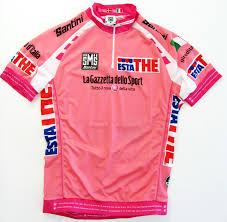  Route  Profile  Despite the exciting first half of the Giro, we haven't had a huge amount of proper mountain stages with summit finishes. That all changes today on this stage that will bring back memories of Pantani for the Tifosi. This is a proper mountain stage with a proper summit finish, and coming as it does the day after the long individual time trial we could see some big changes in GC. We have three categorised climbs in all (1x Cat 2 & 2 x Cat 1s) but a number of other uncategorised climbs. We start off in the beautiful walled town of Marostica, in the Veneto, famous for its giant game of chess played every year with people for pieces. The peloton goes initially West, then North West through Valdastico where we find the opening climb of the day, (Cat 2) La Fricca. We descend through Trento, before tackling the sharp but uncategorised Monte Bodone climb. The peloton then follow the route to Sarche, Terme di Comano and Tione di Trento. 40km from the end of the stage the peloton hit the base of the very tough Passo Daone climb (Cat 1).  Passo Daone will cause some serious damage. It is 8.4km long, with an average gradient of 9.2%. It has several long sections at 11%+ and it has maximum gradients of 14%. Most of the very steep sections are actually in the first half of the climb, and the last 2-3km are a bit more steady, but still get to 9%. There is no time to switch off after cresting the summit because the peloton have a very steep and tricky descent off Passo Daone. This is a narrow mountain road with lots of hairpins. At the bottom of the descent the road starts to rise again towards the final climb at Madonna Di Campiglio (Cat 1).  Madonna Di Campiglio is actually a fairly steady climb compared to Passo Daone, although at 15.5km it is far longer. The climb runs through the urban area of Madonna di Campiglio, and contains a short paved section. The steepest sections of the climb are found about 2-3km from the end of the stage where the road rises to 12% just outside the town before easing off again. The last 2km are at 7% on well surfaced asphalt roads, 5.5 wide at the finish.    Madonna Di Campiglio is a ski resort in Trentino which is seen as the gateway to the Dolomites. It has been the destination of one previous Giro stage, when Marco Pantani won Stage 20 in 1999 before being chucked out while leading due to a hematocrit reading of 52%. Many of Pantani's supporters say that even though he did win races after this, he never really recovered from the disgrace of this doping charge and from having that year's Giro snatched from his grasp. Fabio Aru will want to take the stage on this climb due to its importance in Italian cycling history, and Porte will think that the steady final climb suits his talents but surely no-one will be able to live with Alberto Contador if he decides to take this stage.  |
|
By:
Stage 18 » Melide › Verbania (170k)
 Route  Profile  A flat stage to start with but one with a serious sting in the tail. Today's stage is 170km, of which the first 120km are virtually completely flat. We then have a sole categorised climb, but it's a big one and a fast descent to the line. So the peloton take the line in Melida, which is still in Switzerland, on Lake Lugano, right across from the strange Italian state of Campione d’Italia. From there they take the road over Lugano, and clockwise Southwards around it. At Port Ceresio they move away from the lake, heading South West on the ss344 to Lago di Varese and then on to Lago di Maggiore. We also follow this lake clockwise, northwards through Stresa, Feriolo and Bieno. From Bieno they head North East towards the climb of Monte Ologno, before turning back around Southwards to the finish town of Verbania.  Monte Ologna is a seriosuly hard climb. 10km long with an average gradient of over 9% is no joke, except that it's the first uphill gradient and it comes 123km into a 170km long stage. The steepest slopes are on the early part of the climb, where it goes up to 13% but the last 4km average virtually 10% and this will see a very select group get to the top. By the time the boys crest "Henry" they are only 27km away from the end of the stage. As the next 22km are all downhill, and there's only 5km of flat at the bottom, anyone that gets a decent distance could stay away if the GC boys all mark each other. [img]http://images.onesite.com/community.betfair.com/user/marychain1/4b38ad5cd3998d44c73f015a869f478a.png?v=201600[/img The first part of the descent from Henry to Verbania is curvy and technical, although not too steep. Although it gets steeper on the lower slopes, it gets wider so there should be no issues unless the weather comes in. The descent averages about 5%, but when it flattens out 5km from the end it runs past a number of traffic islands and roundabouts. Once we reach the waterfront the last 3.5km are fairly straightforward however, and although the finiish straight is only 200m long Piazza Garibaldi is 6.5m wide and asphalt. The last time the Giro finished in Verbania was in 1992 when Franco Chicchioli won Stage 19. A decent climber is going to take this stage but anyone that wants to stay out after the Oonga must be a top class descender. Someone like Adam Hansen might fit the bill.    |
|
By:
Stage 18 » Melide › Verbania (170k)
Route Profile A flat stage to start with but one with a serious sting in the tail. Today's stage is 170km, of which the first 120km are virtually completely flat. We then have a sole categorised climb, but it's a big one and a fast descent to the line. So the peloton take the line in Melida, which is still in Switzerland, on Lake Lugano, right across from the strange Italian state of Campione d’Italia. From there they take the road over Lugano, and clockwise Southwards around it. At Port Ceresio they move away from the lake, heading South West on the ss344 to Lago di Varese and then on to Lago di Maggiore. We also follow this lake clockwise, northwards through Stresa, Feriolo and Bieno. From Bieno they head North East towards the climb of Monte Ologno, before turning back around Southwards to the finish town of Verbania. Monte Ologna is a seriosuly hard climb. 10km long with an average gradient of over 9% is no joke, except that it's the first uphill gradient and it comes 123km into a 170km long stage. The steepest slopes are on the early part of the climb, where it goes up to 13% but the last 4km average virtually 10% and this will see a very select group get to the top. By the time the boys crest "Henry" they are only 27km away from the end of the stage. As the next 22km are all downhill, and there's only 5km of flat at the bottom, anyone that gets a decent distance could stay away if the GC boys all mark each other.  The first part of the descent from Henry to Verbania is curvy and technical, although not too steep. Although it gets steeper on the lower slopes, it gets wider so there should be no issues unless the weather comes in. The descent averages about 5%, but when it flattens out 5km from the end it runs past a number of traffic islands and roundabouts. Once we reach the waterfront the last 3.5km are fairly straightforward however, and although the finiish straight is only 200m long Piazza Garibaldi is 6.5m wide and asphalt. The last time the Giro finished in Verbania was in 1992 when Franco Chicchioli won Stage 19. A decent climber is going to take this stage but anyone that wants to stay out after the Oonga must be a top class descender. Someone like Adam Hansen might fit the bill. |
|
By:
Stage 19 » Gravellona Toce › Cervinia (236k)
Route  Profile  This is the Queen Stage of the 2015 Giro D'Italia and it's a long old stage with plenty of climbing. There's 4,800m of climbing here - 4 categorised climbs, a Cat 3 and 4x big Cat 1s that all come in the final 100km. We start in Gravellona Toce on the shore of Lake Maggiore, round the corner from yesterday's finish town of Verbania. The route heads Southwards at first, before bending West towards Biella and the first climb of the day, the Croce Serra. Other than that one climb, the first 130km of this stage are pretty flat. We enter the Aosta valley and the road starts to get a little more lumpy. There are a number of uncategorised climbs before we get to Cat 1 St. Barthélemy.  St. Barthélemy is 16.5km at 6.7%. The harshest slopes are on the lower slopes. The gradient barely drops below 7.5% for the first 7km, before easing off a little in the middle. It gets steeper again on the higher slopes before flattening out towards the top. The descent from St. Barthélemy is long and winding, and it goes straight into the second Cat 1 climb, St. Pantaléon.  St. Pantaléon is the hardest climb of the three - 16.5km at 7.2% average. The gradients remain remarkably consistent throughout this climb but the relentless nature of it will really take its toll on the legs. There are a couple of areas where the gradient levels out, but they are nothing more than a brief chance to grab some breath before the gradient ramps up again. The last 2km of this climb are at 9% and should really hurt. There is a much shorter descent off St. Pantaléon before the peloton tackle the 3rd and final Cat 1 climb of the day, Cervinia.  Cervinia is 19km at 5% gradient, although that average is brought down by several flat sections. The middle section of this climb is hard, with 8.5km averaging 7.7%. The route goes up all the way to the line, with the steepest sections up to 12% as it goes through the town of Valtournenche. There are two tunnels in the last 6km. The gradient flattens out with 2,000m to go. The home straight is 450m long on Via G Rey, with a gradient of 4%. Alberto Contador has been by far the best climber in the race but does not yet have a stage to his name. A win in the Queen Stage woudl be a fitting way of putting that right.   |
|
By:
2015 » 67th Critérium du Dauphiné (2.UWT)
 Critérium du Dauphiné Stage-by-Stage Sunday 7th June - Stage 1 (medium mountain) - Ugine › Albertville (132k) Monday 8th June - Stage 2 (medium mountain) - Le Bourget-du-Lac › Parc des Oiseaux Villars-les-Dombes (173k) Tuesday 9th June - Stage 3 (TTT) - Roanne › Montagny (24.5k) Wednesday 10th June - Stage 4 (medium mountain) - Anneyron › Sisteron (228k) Thursday 11th June - Stage 5 (mountain) - Digne-les-Bains › Pra-Loup (161k) Friday 12th June - Stage 6 (mountain) - Saint-Bonnet-en-Champsaur › Villard-de-Lans - Vercors (183k) Saturday 13th June - Stage 7 (mountain) - Montmélian › Saint-Gervais Mont Blanc (155k) Sunday 14th June - Stage 8 (mountain) - Saint-Gervais Mont Blanc › Modane Valfréjus (156.5k) 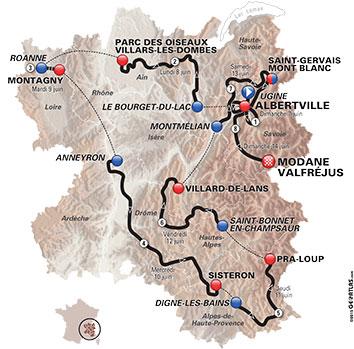 The Critérium du Dauphiné is probably the most important stage race in the calendar outside of the three Grand Tours. The 2015 edition is the 67th running. The race takes place in the Dauphiné region of South East France, and used to be known as the Dauphiné Libéré after the regional newspaper that originally founded and ran the race, with the first edition taking place in 1947. As usual, the race contains plenty of climbing miles this year. As well as an important race in its own right, the Dauphiné is important as prep for the Tour de France, this year possibly more than most due to several similarities between this route and some stages of the Tour. This year we have a 24.5km team time trial (Stage 3) from Roanne - Montagny and we should see the teams use this to fine tune their skills ahead of the Tour's similar test in Brittany. The Dignes-Pra Loup (Stage 5) is identical to Stage 17 of the Tour, and the category 2 Montvernier climb from Stage 8 here is the final climb on Stage 18 of the Tour, coming just 8km from the end of the stage in St-Jean de Maurienne. Chris Froome and Vincenzo Nibali will both use this as a chance to test their form ahead of their clash in the Tour itself. Last year, Nibali finished only 7th in this race before storming to glory in July. Chris Froome came in as defending champion, won the first two stages, including the opening time trial and next mountain stage but then crashed in Stage 6, lost his lead to Alberto Contador in Stage 7 before Andrew Talansky outfoxed both men to take the race overall on the final stage. In the two years before this both Chris Froome (2013) and Bradley Wiggins (2012) took this race before going on to win the Tour itself. It looks like Froome and Nibali will have plenty of competition for the Critérium du Dauphiné yellow jersey in 2015 as Tejay Van Garderen, Joaquin Rodriguez, Alejandro Valverde, Wilco Kelderman, Bauke Mollema, Romain Bardet, JC Peraud, Pierre Rolland and Julian Alaphilippe are all scheduled to be here. It will be interesting to see whether Nibali comes into this at 100% or if he's left something to work on with over a month still to go until he defends his Tour title.  Startlist http://www.procyclingstats.com/race/Criterium_du_Dauphine_2015-startlist Critérium du Dauphiné Previous Winners 2014 | TALANSKY Andrew 2013 | FROOME Christopher 2012 | WIGGINS Bradley 2011 | WIGGINS Bradley 2010 | BRAJKOVIč Janez 2009 | VALVERDE Alejandro 2008 | VALVERDE Alejandro 2007 | MOREAU Christophe 2006 | LEIPHEIMER Levi 2005 | LANDALUZE INTXAURRAGA Inigo 2014 Critérium du Dauphiné Top-10 1.TALANSKY Andrew 31:08:08 2.CONTADOR Alberto 0:27 3.VAN DEN BROECK Jurgen 0:35 4.KELDERMAN Wilco 0:43 5.BARDET Romain 1:20 6.YATES Adam 2:05 7.NIBALI Vincenzo 2:12 8.NIEVE Mikel 2:59 9.NAVARRO Daniel 3:04 10.FUGLSANG Jakob 3:17  |
|
By:
   |
|
By:
Sunday 7th June - Stage 1 (medium mountain) - Ugine › Albertville (132k)
   Monday 8th June - Stage 2 (medium mountain) - Le Bourget-du-Lac › Parc des Oiseaux Villars-les-Dombes (173k)     Stages 1 and 2 are lumpy, and should have to many climbs for the true sprinters but have flat run-ins and shouldn't have any impact at all on the GC or worry any of the contenders for overall glory. Tuesday 9th June - Stage 3 (TTT) - Roanne › Montagny (24.5k)   The stage 3 team time trial should create some decent time gaps. The first half of the TTT is pretty straightforward, and the teams with the really powerful riders should be able to go well. There are some uphill sections in the second half of this route, and it is more technical. Wednesday 10th June - Stage 4 (medium mountain) - Anneyron › Sisteron (228k)    Stage 4 is long and lumpy with three categorised climbs and some uncategorised ones too but it is probably the sprinters' best chance of a result. Thursday 11th June - Stage 5 (mountain) - Digne-les-Bains › Pra-Loup (161k)    This is an exact replica of Stage 17 of the Tour, which is the tdf's first venture into the Alps this year. Neither d'Allos or Pra Loup are the hardest climbs in the world by themselves but together and taken at pace at the end of this stage they should show who is in form. Friday 12th June - Stage 6 (mountain) - Saint-Bonnet-en-Champsaur › Villard-de-Lans - Vercors (183k)     Not the hardest stage on paper, but a tricky one nevertheless, with 6 categorised climbs including the Cat 1 Col du Rousset. This could suit a breakaway. There are plenty of sharp little walls in the profile as well and the last 3km average about 5% so it should be won by a decent climber. Saturday 13th June - Stage 7 (mountain) - Montmélian › Saint-Gervais Mont Blanc (155k)      The hardest stage of the week for sure with 6 categorised climbs in all, including 5 Cat 1s! This should see all hell break loose and quite possibly decide the GC. Sunday 14th June - Stage 8 (mountain) - Saint-Gervais Mont Blanc › Modane Valfréjus (156.5k)    A few nasty climbs and a summit finish but a lot easier than yesterday. |
|
By:
2015 » 67th Critérium du Dauphiné (2.UWT)
 Critérium du Dauphiné Stages Sunday 7th June - Stage 1 (medium mountain) - Ugine › Albertville (132k) Monday 8th June - Stage 2 (medium mountain) - Le Bourget-du-Lac › Parc des Oiseaux Villars-les-Dombes (173k) Tuesday 9th June - Stage 3 (TTT) - Roanne › Montagny (24.5k) Wednesday 10th June - Stage 4 (medium mountain) - Anneyron › Sisteron (228k) Thursday 11th June - Stage 5 (mountain) - Digne-les-Bains › Pra-Loup (161k) Friday 12th June - Stage 6 (mountain) - Saint-Bonnet-en-Champsaur › Villard-de-Lans - Vercors (183k) Saturday 13th June - Stage 7 (mountain) - Montmélian › Saint-Gervais Mont Blanc (155k) Sunday 14th June - Stage 8 (mountain) - Saint-Gervais Mont Blanc › Modane Valfréjus (156.5k) The Critérium du Dauphiné is probably the most important stage race in the calendar outside of the three Grand Tours. The 2015 edition is the 67th running. The race takes place in the Dauphiné region of South East France, and used to be known as the Dauphiné Libéré after the regional newspaper that originally founded and ran the race, with the first edition taking place in 1947. As usual, the race contains plenty of climbing miles this year. As well as an important race in its own right, the Dauphiné is important as prep for the Tour de France, this year possibly more than most due to several similarities between this route and some stages of the Tour. This year we have a 24.5km team time trial (Stage 3) from Roanne - Montagny and we should see the teams use this to fine tune their skills ahead of the Tour's similar test in Brittany. The Dignes-Pra Loup (Stage 5) is identical to Stage 17 of the Tour, and the category 2 Montvernier climb from Stage 8 here is the final climb on Stage 18 of the Tour, coming just 8km from the end of the stage in St-Jean de Maurienne. 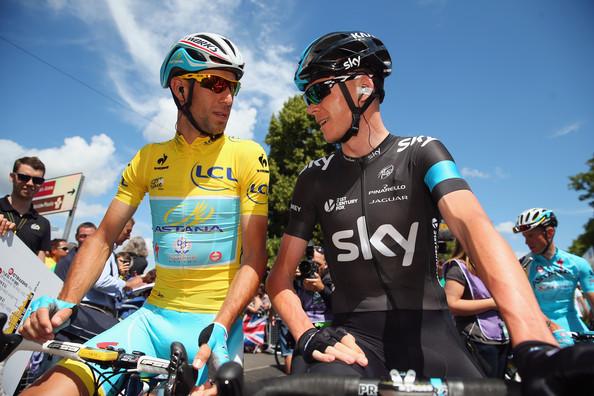 Chris Froome and Vincenzo Nibali will both use this as a chance to test their form ahead of their clash in the Tour itself. Last year, Nibali finished only 7th in this race before storming to glory in July. Chris Froome came in as defending champion, won the first two stages, including the opening time trial and next mountain stage but then crashed in Stage 6, lost his lead to Alberto Contador in Stage 7 before Andrew Talansky outfoxed both men to take the race overall on the final stage. In the two years before this both Chris Froome (2013) and Bradley Wiggins (2012) took this race before going on to win the Tour itself. It looks like Froome and Nibali will have plenty of competition for the Critérium du Dauphiné yellow jersey in 2015 as Tejay Van Garderen, Joaquin Rodriguez, Alejandro Valverde, Wilco Kelderman, Bauke Mollema, Romain Bardet, JC Peraud, Pierre Rolland and Julian Alaphilippe are all scheduled to be here. It will be interesting to see whether Nibali comes into this at 100% or if he's left something to work on with over a month still to go until he defends his Tour title. Startlist http://www.procyclingstats.com/race/Criterium_du_Dauphine_2015-startlist Critérium du Dauphiné Previous Winners 2014 | TALANSKY Andrew 2013 | FROOME Christopher 2012 | WIGGINS Bradley 2011 | WIGGINS Bradley 2010 | BRAJKOVIč Janez 2009 | VALVERDE Alejandro 2008 | VALVERDE Alejandro 2007 | MOREAU Christophe 2006 | LEIPHEIMER Levi 2005 | LANDALUZE INTXAURRAGA Inigo 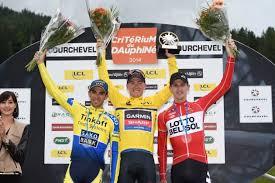 2014 Critérium du Dauphiné Top-10 1.TALANSKY Andrew 31:08:08 2.CONTADOR Alberto 0:27 3.VAN DEN BROECK Jurgen 0:35 4.KELDERMAN Wilco 0:43 5.BARDET Romain 1:20 6.YATES Adam 2:05 7.NIBALI Vincenzo 2:12 8.NIEVE Mikel 2:59 9.NAVARRO Daniel 3:04 10.FUGLSANG Jakob 3:17 Sunday 7th June - Stage 1 (medium mountain) - Ugine › Albertville (132k) Monday 8th June - Stage 2 (medium mountain) - Le Bourget-du-Lac › Parc des Oiseaux Villars-les-Dombes (173k) Stages 1 and 2 are lumpy, and should have to many climbs for the true sprinters but have flat run-ins and shouldn't have any impact at all on the GC or worry any of the contenders for overall glory. Tuesday 9th June - Stage 3 (TTT) - Roanne › Montagny (24.5k) The stage 3 team time trial should create some decent time gaps. The first half of the TTT is pretty straightforward, and the teams with the really powerful riders should be able to go well. There are some uphill sections in the second half of this route, and it is more technical. Wednesday 10th June - Stage 4 (medium mountain) - Anneyron › Sisteron (228k) Stage 4 is long and lumpy with three categorised climbs and some uncategorised ones too but it is probably the sprinters' best chance of a result. Thursday 11th June - Stage 5 (mountain) - Digne-les-Bains › Pra-Loup (161k) This is an exact replica of Stage 17 of the Tour, which is the tdf's first venture into the Alps this year. Neither d'Allos or Pra Loup are the hardest climbs in the world by themselves but together and taken at pace at the end of this stage they should show who is in form. Friday 12th June - Stage 6 (mountain) - Saint-Bonnet-en-Champsaur › Villard-de-Lans - Vercors (183k) Not the hardest stage on paper, but a tricky one nevertheless, with 6 categorised climbs including the Cat 1 Col du Rousset. This could suit a breakaway. There are plenty of sharp little walls in the profile as well and the last 3km average about 5% so it should be won by a decent climber. Saturday 13th June - Stage 7 (mountain) - Montmélian › Saint-Gervais Mont Blanc (155k) The hardest stage of the week for sure with 6 categorised climbs in all, including 5 Cat 1s! This should see all hell break loose and quite possibly decide the GC. Sunday 14th June - Stage 8 (mountain) - Saint-Gervais Mont Blanc › Modane Valfréjus (156.5k) A few nasty climbs and a summit finish but a lot easier than yesterday. |
|
By:
BARCELONA
|
|
By:
2015 » 79th Tour de Suisse (2.UWT)
 Stages Prologue Saturday 13th June - Risch-Rotkreuz › Risch-Rotkreuz (5.1k) 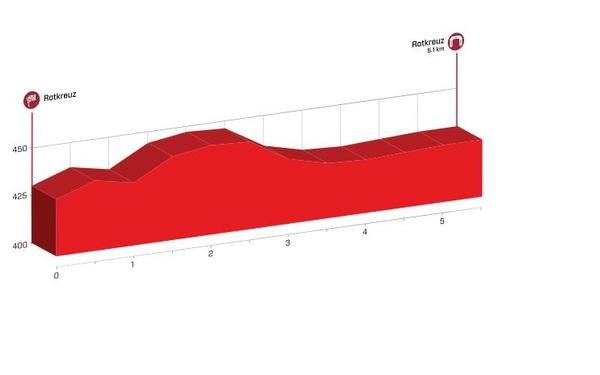 Stage 2 Sunday 14th June - Risch-Rotkreuz › Risch-Rotkreuz (161.1k) (medium mountain) 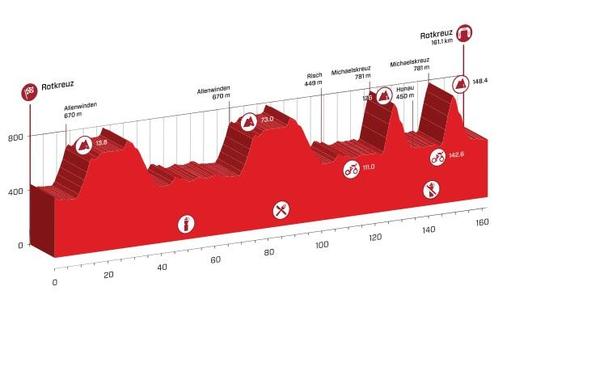 Stage 3 Monday 15th June - Quinto › Olivone (117.3k) (mountain) 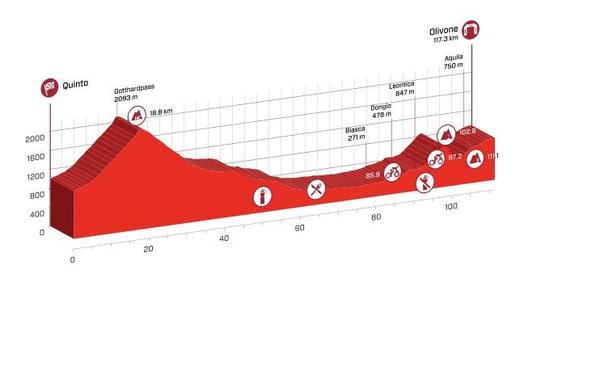 Stage 4 Tuesday 16th June - Flims › Schwarzenbach (193.2k) (medium mountain) 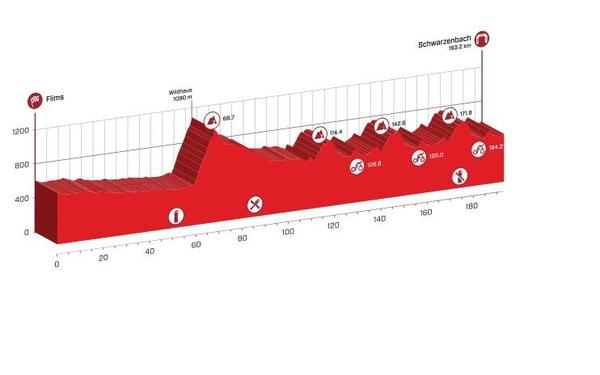 Stage 5 Wednesday 17th June - Unterterzen/Flumserberg › Sölden/Rettenbachgietscher (237.3k) (mountain) 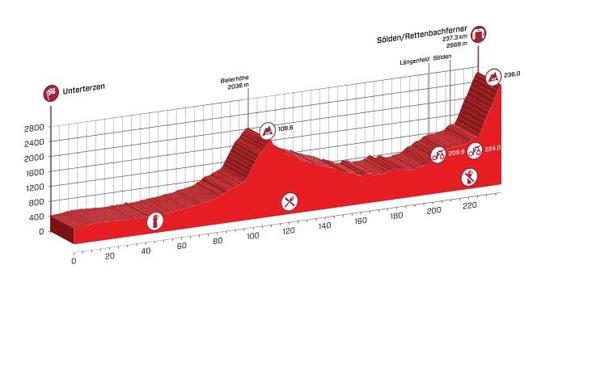 Stage 6 Thursday 18th June - Wil › Biel/Bienne (193.1k) (medium mountain) 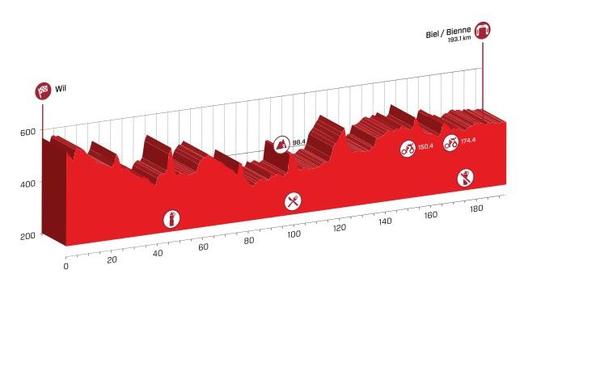 Stage 7 Friday 19th June - Biel/Bienne › Düdingen (164.6k) (medium mountain) 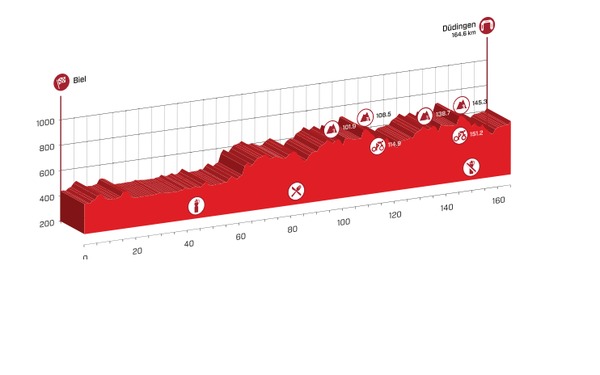 Stage 8 Saturday 20th June - Bern › Bern (152.5k) (medium mountain) 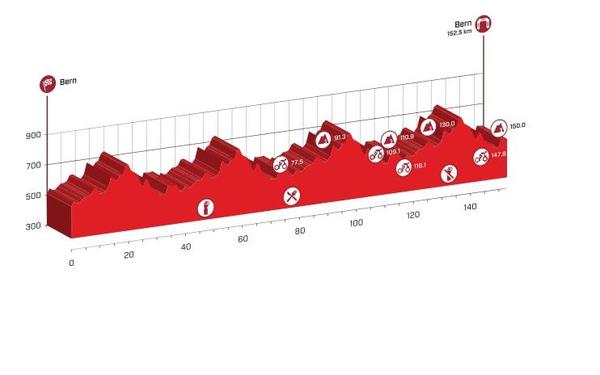 Stage 9 (ITT) Sunday 21st June - Bern › Bern (38.4k) 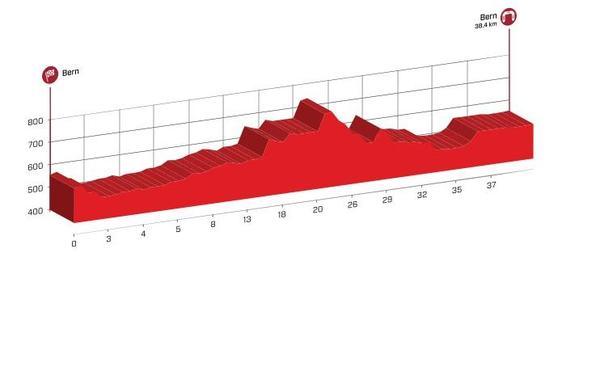 Most of the really big names are competing in the Dauphine, but the nice mix of different stage types mean plenty of stars will be coming to Switzerland for this 9-day tour. The 7 road stages are bookended by individual time trials, and the second of those should decide the GC. Of potential contenders, Thibault Pinot is the probably the best in the mountains, Michal Kwiatowski and Simon Spilak have an advantage against the clock and Jakob Fuglsang, Rafal Majka and Sergio Henao will hope to perform well enough at both disciplines while they are off the domestique duty leash. There is enough chance of a couple of bunch sprints that Cavendish, Kristoff, Sagan and Degenkolb are here and it looks like Spartacus will make his comeback from injury in his home tour as well. There are some hilly stages and some tough climbs. Stage 5 on Thursday is the Queen stage, is 237km long and contains two tough climbs including a summit finish on the Rettenbachferner which has 12km at 10%. Tour de Suisse Winners 2014 | COSTA Rui 2013 | COSTA Rui 2012 | COSTA Rui 2011 | LEIPHEIMER Levi 2010 | SCHLECK Fränk 2009 | CANCELLARA Fabian 2008 | KREUZIGER Roman 2007 | KARPETS Vladimir 2005 | GONZALEZ Aitor 2004 | ULLRICH Jan Top-10 2014 Tour de Suisse 1.COSTA Rui 33:08:35 2.FRANK Mathias 0:33 3.MOLLEMA Bauke 0:50 4.MARTIN Tony 1:13 5.DUMOULIN Tom 2:04 6.MORABITO Steve 2:47 7.FORMOLO Davide 3:00 8.KREUZIGER Roman 3:03 9.ACEVEDO Janier Alexis 3:20 10.CAPECCHI Eros 3:46  Market http://www.oddschecker.com/cycling/tour-de-suisse/winner Startlist http://www.procyclingstats.com/race/Tour_de_Suisse_2015-startlist  |
|
By:
Back (Bet For)
Odds Stake [?] Profit Canyari £2,800.00. Lay (Bet Against) Backer's odds Backer's stake Payout Liability [?] Canyari £140.00 . . Liability: £500.00 |
|
By:
2015 » 102nd Tour de France (2.UWT)
 This should be an absolute stunner of a race. We have got four absolutely top class GC riders all facing off on what could be the best parcours for many years. Ultimately, this race has heaps of climbing, and with the lack of TT miles it will suit the best climbers with mountaintop finishes on Stages 10, 12, 17, 19 and 20. It also has other uphill finishes that may not lead to big time gaps but should be entertaining on Stages 3, 6, 8, 11 and 14. Although the winner of this year's Tour will almost definitely be the rider who is strongest in the mountains, he will have to get through the first 10 stages first, and these look particularly nasty, especially the first week's Classics based trilogy. 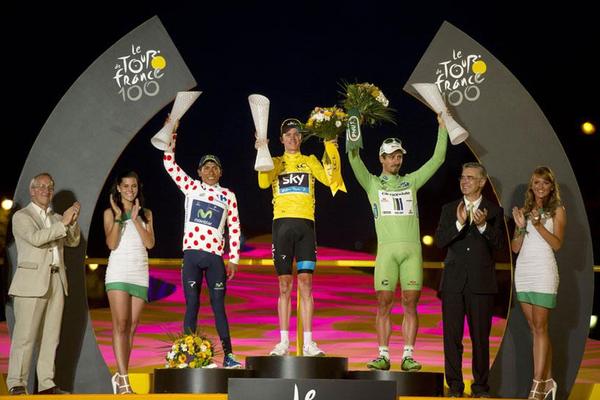 After the Grand Depart ITT in Utrecht we have a stage that from Utrecht to Zeeland, that follows the North Sea and is begging for crosswinds and echelons. Next we see a stage that resembles La Fleche Wallone and finishes on the Mur de Huy. Following that the riders take on the cobbles in a stage from Seraing to Cambrai. Any of these three stages could see the race over for one of the big favourites. We then have a busy flat stage where the wind could blow but might end in a sprint, a chaotic flat stage with a punchers’ finish in Le Havre, a true flat stage and then another uphill finish at Mur de Bretagne. The team time trial comes on Day 9, where legs will already be very sore. The climb at the end should see big time gaps. Every man lost during the first 8 days will be crucial, because it will make the TTT harder, and we could see some very ragged looking teams at the end. Finally, the riders get a rest day, but this too could provide problems because Stage 10 after it has an HC climb at the end. 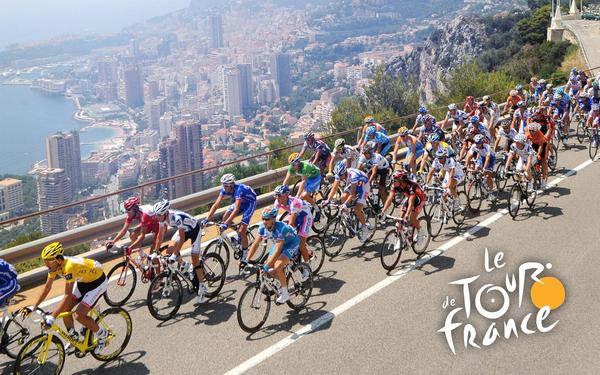 After that we have Pyrenean climbs, transitional stages that all look interesting and different before a lot of Alpine climbing with accompanying descents towards the end of the race. The last mountain stage sees us go (back) over the Croix de Fer and L'Alpe D'Huez so the GC may well be decided on the penultimate day of the race. As well as first week of classic style races, we have a number of other changes this year. We have time bonuses for winning stages in the first week, and we have a change to the points classification to reward winners of true flat (super sprint) stages. This is to try and get the green jersey on the back of the most explosive sprinter, rather than the most consistent and may lead to Sagan having his work cut out to win it again. 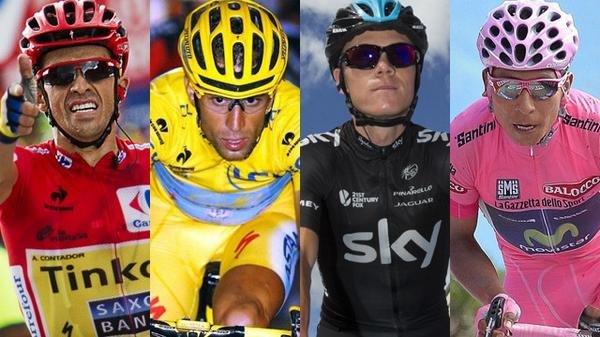 All in all this should be a brilliant Grand Tour. Despite the plethora of climber-friendly stages, I think the 2015 Tour de France will be won by someone who combines team strength and experience, who can avoid crashing out or losing time in the first week and I think Vincenzo Nibali is that man. Admittedly, Quintana and Froome will be big threats if they are still in contention after the TTT but it might be worth waiting until the first rest day before backing those two. It remains to be seen if Contador will be able to find top level after this Giro win but if he can retain/regain top form for three weeks he will be a force. 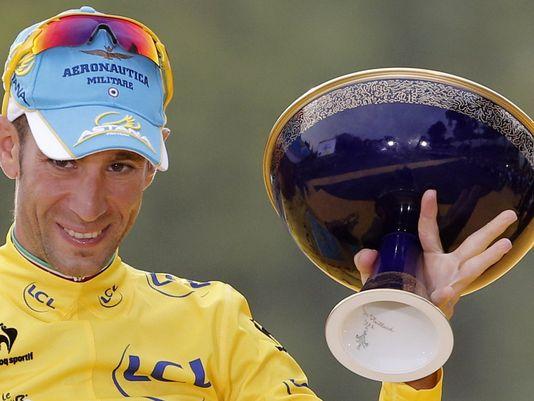 Tour de France Winners 2014 | NIBALI Vincenzo 2013 | FROOME Christopher 2012 | WIGGINS Bradley 2011 | EVANS Cadel 2010 | SCHLECK Andy 2009 | CONTADOR Alberto 2008 | SASTRE Carlos 2007 | CONTADOR Alberto 2006 | PEREIRO Oscar 2000 | ARMSTRONG Lance Top-10 2014 Tour de France 1.NIBALI Vincenzo 89:59:06 2.PERAUD Jean-Christophe 7:37 3.PINOT Thibaut 8:15 4.VALVERDE Alejandro 9:40 5.VAN GARDEREN Tejay 11:24 6.BARDET Romain 11:26 7.KöNIG Leopold 14:32 8.ZUBELDIA Haimar 17:57 9.TEN DAM Laurens 18:11 10.MOLLEMA Bauke 21:15 Startlist http://www.procyclingstats.com/race/Tour_de_France_2015-startlist 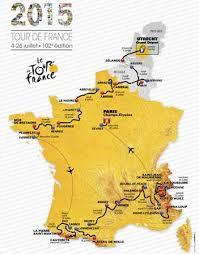 Stage-by-Stage Saturday 4th July Stage 1 (ITT) - Utrecht › Utrecht (13.8k) Sunday 5th July Stage 2 - Utrecht › Neeltje Jans (166k) *Super Sprint* Monday 6th July Stage 3 - Antwerpen › Huy (159.5k)*Sprint* Tuesday 7th July Stage 4 - Seraing › Cambrai (223.5k)*Sprint* Wednesday 8th July Stage 5 - Arras › Amiens (189.5k) *Super Sprint* Thursday 9th July Stage 6 - Abbeville › Le Havre (191.5k) *Super Sprint* Friday 10th July Stage 7 - Livarot › Fougères (190.5k) *Super Sprint* Saturday 11th July Stage 8 - Rennes › Mûr-de-bretagne (181.5k)*Sprint* Sunday 12th July Stage 9 (TTT) - Vannes › Plumelec (28k) Tuesday 14th July Stage 10 - Tarbes › La Pierre-Saint-Martin (167k) Wednesday 15th July Stage 11 - Pau › Cauterets (188k) Thursday 16th July Stage 12 - Lannemezan › Plateau de Beille (195k) Friday 17th July Stage 13 - Muret › Rodez (198.5k)*Sprint* Saturday 18th July Stage 14 - Rodez › Mende (178.5k)*Sprint* Sunday 19th July Stage 15 - Mende › Valence (183k) *Super Sprint* Monday 20th July Stage 16 - Bourg-de-Péage › Gap (201k)*Sprint* Tuesday 22nd July Stage 17 - Digne-Les-Bains › Pra-Loup (161k) Wednesday 23rd July Stage 18 - Gap › St-Jean-de-Maurienne (186.5k) Thursday 24th July Stage 19 - St-Jean-de-Maurienne › La Toussuire - Les Sybelles (138k) Friday 25th July Stage 20 - Modane › l'Alpe d'Huez (110.5k) Saturday 26th July Stage 21 - Sèvres › Paris (109.5k) *Super Sprint*  Jersey Favourites  Froome 2/1 Quintana 5/2 Contador 4/1 Nibali 11/2 Pinot 28/1 Van Garderen 33/1 Valverde 66/1 Majka 66/1 Bardet 66/1 Porte 66/1 http://www.oddschecker.com/cycling/tour-de-france/winner  Sagan 10/11 Kristoff 4/1 Cavendish 13/2 Degenkolb 12/1 Matthews 25/1 Bouhanni 25/1 Coquard 25/1 Greipel 33/1 Boassen Hagen 66/1 Demare 80/1 http://www.oddschecker.com/cycling/tour-de-france/points-classification *pay attention to place terms in this market as many bookmakers are only paying 2 places on each way bets 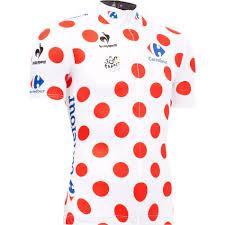 Quintana 11/2 Rolland 10/1 Contador 11/1 Froome 11/1 Rodriguez 16/1 Arredondo 16/1 Pinot 20/1 Bardet 25/1 Hesjedal 28/1 Barguil 28/1 http://www.oddschecker.com/cycling/tour-de-france/king-of-the-mountains  Quintana 4/7 Pinot 5/1 Bardet 10/1 Kelderman 20/1 Barguil 25/1 Kwiatowski 25/1 S Yates 33/1 A Yates 50/1 http://www.oddschecker.com/cycling/tour-de-france/young-rider-classification  Posters   |
|
By:
2015 » 102nd Tour de France (2.UWT)
This should be an absolute stunner of a race. We have got four absolutely top class GC riders all facing off on what could be the best parcours for many years. Ultimately, this race has heaps of climbing, and with the lack of TT miles it will suit the best climbers with mountaintop finishes on Stages 10, 12, 17, 19 and 20. It also has other uphill finishes that may not lead to big time gaps but should be entertaining on Stages 3, 6, 8, 11 and 14. Although the winner of this year's Tour will almost definitely be the rider who is strongest in the mountains, he will have to get through the first 10 stages first, and these look particularly nasty, especially the first week's Classics based trilogy. After the Grand Depart ITT in Utrecht we have a stage that from Utrecht to Zeeland, that follows the North Sea and is begging for crosswinds and echelons. Next we see a stage that resembles La Fleche Wallone and finishes on the Mur de Huy. Following that the riders take on the cobbles in a stage from Seraing to Cambrai. Any of these three stages could see the race over for one of the big favourites. We then have a busy flat stage where the wind could blow but might end in a sprint, a chaotic flat stage with a punchers’ finish in Le Havre, a true flat stage and then another uphill finish at Mur de Bretagne. The team time trial comes on Day 9, where legs will already be very sore. The climb at the end should see big time gaps. Every man lost during the first 8 days will be crucial, because it will make the TTT harder, and we could see some very ragged looking teams at the end. Finally, the riders get a rest day, but this too could provide problems because Stage 10 after it has an HC climb at the end. After that we have Pyrenean climbs, transitional stages that all look interesting and different before a lot of Alpine climbing with accompanying descents towards the end of the race. The last mountain stage sees us go (back) over the Croix de Fer and L'Alpe D'Huez so the GC may well be decided on the penultimate day of the race. As well as first week of classic style races, we have a number of other changes this year. We have time bonuses for winning stages in the first week, and we have a change to the points classification to reward winners of true flat (super sprint) stages. This is to try and get the green jersey on the back of the most explosive sprinter, rather than the most consistent and may lead to Sagan having his work cut out to win it again. All in all this should be a brilliant Grand Tour. Despite the plethora of climber-friendly stages, I think the 2015 Tour de France will be won by someone who combines team strength and experience, who can avoid crashing out or losing time in the first week and I think Vincenzo Nibali is that man. Admittedly, Quintana and Froome will be big threats if they are still in contention after the TTT but it might be worth waiting until the first rest day before backing those two. It remains to be seen if Contador will be able to find top level after this Giro win but if he can retain/regain top form for three weeks he will be a force. Tour de France Winners 2014 | NIBALI Vincenzo 2013 | FROOME Christopher 2012 | WIGGINS Bradley 2011 | EVANS Cadel 2010 | SCHLECK Andy 2009 | CONTADOR Alberto 2008 | SASTRE Carlos 2007 | CONTADOR Alberto 2006 | PEREIRO Oscar 2000 | ARMSTRONG Lance Top-10 2014 Tour de France 1.NIBALI Vincenzo 89:59:06 2.PERAUD Jean-Christophe 7:37 3.PINOT Thibaut 8:15 4.VALVERDE Alejandro 9:40 5.VAN GARDEREN Tejay 11:24 6.BARDET Romain 11:26 7.KöNIG Leopold 14:32 8.ZUBELDIA Haimar 17:57 9.TEN DAM Laurens 18:11 10.MOLLEMA Bauke 21:15 Startlist http://www.procyclingstats.com/race/Tour_de_France_2015-startlist Stage-by-Stage Saturday 4th July Stage 1 (ITT) - Utrecht › Utrecht (13.8k) Sunday 5th July Stage 2 - Utrecht › Neeltje Jans (166k) *Super Sprint* Monday 6th July Stage 3 - Antwerpen › Huy (159.5k)*Sprint* Tuesday 7th July Stage 4 - Seraing › Cambrai (223.5k)*Sprint* Wednesday 8th July Stage 5 - Arras › Amiens (189.5k) *Super Sprint* Thursday 9th July Stage 6 - Abbeville › Le Havre (191.5k) *Super Sprint* Friday 10th July Stage 7 - Livarot › Fougères (190.5k) *Super Sprint* Saturday 11th July Stage 8 - Rennes › Mûr-de-bretagne (181.5k)*Sprint* Sunday 12th July Stage 9 (TTT) - Vannes › Plumelec (28k) Tuesday 14th July Stage 10 - Tarbes › La Pierre-Saint-Martin (167k) Wednesday 15th July Stage 11 - Pau › Cauterets (188k) Thursday 16th July Stage 12 - Lannemezan › Plateau de Beille (195k) Friday 17th July Stage 13 - Muret › Rodez (198.5k)*Sprint* Saturday 18th July Stage 14 - Rodez › Mende (178.5k)*Sprint* Sunday 19th July Stage 15 - Mende › Valence (183k) *Super Sprint* Monday 20th July Stage 16 - Bourg-de-Péage › Gap (201k)*Sprint* Tuesday 22nd July Stage 17 - Digne-Les-Bains › Pra-Loup (161k) Wednesday 23rd July Stage 18 - Gap › St-Jean-de-Maurienne (186.5k) Thursday 24th July Stage 19 - St-Jean-de-Maurienne › La Toussuire - Les Sybelles (138k) Friday 25th July Stage 20 - Modane › l'Alpe d'Huez (110.5k) Saturday 26th July Stage 21 - Sèvres › Paris (109.5k) *Super Sprint* Favourites Froome 2/1 Quintana 5/2 Contador 4/1 Nibali 11/2 Pinot 28/1 Van Garderen 33/1 Valverde 66/1 Majka 66/1 Bardet 66/1 Porte 66/1 http://www.oddschecker.com/cycling/tour-de-france/winner Sagan 10/11 Kristoff 4/1 Cavendish 13/2 Degenkolb 12/1 Matthews 25/1 Bouhanni 25/1 Coquard 25/1 Greipel 33/1 Boassen Hagen 66/1 Demare 80/1 http://www.oddschecker.com/cycling/tour-de-france/points-classification *pay attention to place terms in this market as many bookmakers are only paying 2 places on each way bets Quintana 11/2 Rolland 10/1 Contador 11/1 Froome 11/1 Rodriguez 16/1 Arredondo 16/1 Pinot 20/1 Bardet 25/1 Hesjedal 28/1 Barguil 28/1 http://www.oddschecker.com/cycling/tour-de-france/king-of-the-mountains Quintana 4/7 Pinot 5/1 Bardet 10/1 Kelderman 20/1 Barguil 25/1 Kwiatowski 25/1 S Yates 33/1 A Yates 50/1 http://www.oddschecker.com/cycling/tour-de-france/young-rider-classification Posters 2015 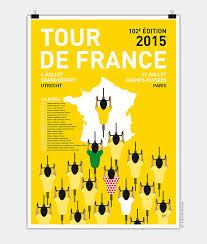 2014  2013 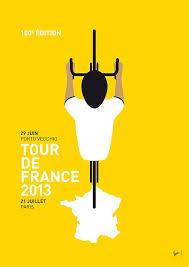 2012  2011  2010 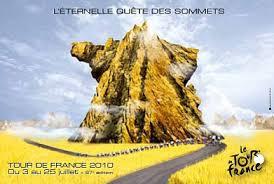 2009  2008  2007  2006  |
|
By:
Stage 1 (ITT) » Utrecht › Utrecht (13.8k)
 This is an ITT rather than a prologue, and is the only ITT in the whole race. It's the 6th time that the Tour has started in Holland, and the first time it has been to Utrecht. At 13.8km this is quite long for an opening stage TT, as the organisers have often preferred prologues. This is actually the 4th longest opening stage time trial, but at this length we shouldn't see very big time gaps. It will favour the rouleurs as the route is very flat, and fairly uncomplicated. Tony Martin might prefer something a bit longer than this but will quite rightly go in as favourite. Fabian Cancellara, who won the prologue in the Tour de Suisse, and home favourite Tom Dumoulin will be the biggest threats to Martin's bid to take the first yellow jersey of the 2015 Tour. Chris Froome will look to get his tour of to a good start by putting some time into the other GC contenders, but it is unlikely he will be able to gain more than 20 seconds or so here. Route  Profile  Utrecht  Utrecht is the fourth biggest town in Holland after Amsterdam, Rotterdam and The Hague. It has a city centre with structures dating back to the middle ages, with several beautiful canals and bridges. With the Dutch fans cheering him on, this might be a good opportunity for Tom Dumoulin to take a seat at the top table of Grand Tour time trialling.   |
|
By:
Stage 2 » Utrecht › Neeltje Jans (166k)
Map  Profile  You couldn't get a flatter stage than this second Dutch stage, starting in Utrecht and moving West through Rotterdam to the North Sea coast. The peloton then heads South towards Zeeland where it finishes almost in the sea on the Neeltje Jans dam. This coastal road is severely exposed to the wind. On the dam there is a plaque that reads "Here the tide is ruled by the wind, the moon and us". The wind is said to blow up to 40mph here, and if that happens echelons will form and the peloton will be absolutely blown to pieces. Contenders will have to be absolutely on their toes here to ensure they are near the front. When we last had serious echelons in the Tour on the stage to St Amand Montrond in 2013, on what was an innocuous looking flat stage Alejandro Valverde got caught in the second group and ended up losing nearly ten minutes despite having virtually his whole team working for him, and his GC challenge was done.  Mark Cavendish won the stage that day, and his Etixx team are absolute masters of taking advantage of these Northern European conditions. It would not be a surprise to see Cav open his account on the first road stage of the Tour, and if he also has serious designs on the Green Jersey this year you'd think this stage would be marked in his road book with a thick red marker pen. Neeltje Jans  |
|
By:
Stage 3 » Antwerpen › Huy (159.5k)
Map  Profile  Last Kms  The second part of the Classics Trilogy as we head to Fleche Wallonne territory. Starting in Antwerp, we head over to one of the most famous and pictureqsue climbs in cycling the Mur de Huy. Although this is very similar to the Fleche Wallonne route, there are key differences. First of all, the route is about 50km shorter than the classic, secondly there are less of the small sharp climbs the Fleche Wallonne is famous for. These two factors should ensure the group has thinned out far less than is typical of the classic. The problem here is that there are several tight corners and difficult road layouts to negotiate in the run-up. Because positioning is all important for the finale, we will see a scrap for position in an area of limited space. Mur de Huy   Winning on the Mur de Huy depends on positioning in the run-in, and timing your acceleration. Plenty of riders have felt good on the lowers slopes and attacked, only to be swallowed up later on when the legs have gone. Alejandro Valverde has won the last two editions of La Fleche Wallonne and he is clearly in cracking form so it would be no surprise to see him win this and swap his new Spanish National road race jersey for a nice shiny maillot jaune.  |
|
By:
Stage 4 » Seraing › Cambrai (223.5k)
Map  Profile  Last kms  This is going to be one of the key stages of the 2015 Tour de France. At 223.5km long, this is the longest stage of the tour and the whilst some will see this as a great chance to make up time or pick up a stage win, some will be having nightmares about the 8 sections and 13.3km of cobbles they're due to face on this stage. We start in Seraing near Liege in Belgium and head West. The only significant climb of the day is the Cat 4 Cote de la Citadelle de Namur which comes after 53km. The peloton hit the first section of cobbles is 1800km long at Pont-à-Celles, north of Charleroi. This is only a warm up for the peloton however.  Roughly 11.5km of the last 46km is cobbled, starting with the secteur pavé d'Artres à Famars which is 1200m long. There are further pavé sections with 40km, 36km and 26km to go before we get to the two final, and largest sections of pavé. Secteur pavé de Fontaine-au-Tertre à Quiévy (2) comes with 23.5km to go and last for 3700m. This section is used in Paris-Roubaix, and although it is normally one of the early sections it carries a 4-star rating in terms of length and difficulty. Quiévy Pavé could be decisive   Obviously Quiévy comes much nearer the end than it normally is in Paris-Roubaix so that and the difficulty should see this sector have a massive impact on who wins this stage and who makes time on their rivals. Actually, the cobbles themselves on Secteur pavé de Fontaine-au-Tertre à Quiévy aren't generally in the worst state, but 3700m is a very long sector and if it is wet these cobbles will bee very slippy. Not only that but they riders have to negotiate a slight rise during this sector. The final Secteur pavé d'Avesnes-les-Aubert à Carnières (1) is 2300m long and by the time they get off this section there will be roughly 10km to go.  This stage should be intruiging. Even if the Grand Tour specialists have managed to get through the crosswinds of Zeeland and the crowds at Huy, this will be a stage where they'll do very well to avoid losing time - its difficult access for the team cars, there will be riders all over the road and any puncture, mechanical or crash will see large time losses. Last year on the cobbles it rained, Froome crashed out (before the cobbles) and Nibali attacked making 2-4 minutes on all the other GC contenders - time he never lost. Lars Boom of Belkin won the stage last year, followed by Fuglsang and Nibali of Astana. That all three of them ride for Astana this year strengthens Nibali's team. Plenty of other cobbled classics riders like Vanmarcke and Cancellara should be freed up by their respective sides to make use of their skills on this sort of course, although others like Stannard, Thomas and Van Avermaet may be kept on domestic duties to help their leaders.   Cambrai is a new arrival city for a tour stage. Cambrai is a thriving city that has been important since the days of the Roman Empire and was heavily damaged in both WWI and WWII. The road into Cambrai has a number of turns, including to sharp left handers after the flame rouge. The finish line is on Rue Pasteur, right outside the town hall. |
|
By:
Stage 5 » Arras › Amiens (189.5k)
Today's stage is a flat stage, and it is accordingly one of the allocated 6 "Super Sprint" stages. There are no categorised climbs at all. Although the sprinters will see this as a huge opportunity and the GC guys might think this is a bit of a day off, everyone will have to be on their guard today. This is a pretty unprotected area, with few trees and this could mean the peloton will again be vulnerable to crosswinds in several stretches. There are a number of direction changes today, and we go through a number of small towns. One lapse in concentration could spell disaster. Map  We start today's stage in Arras, in the Pas de Calais region of France. And indeed, Arras is just down the E15 from Calais and near yesterday's finish town of Cambrai. Arras is a historic town formed by the Gauls in the Iron Age on the banks of the Scarpe river. The city is well known for its culture, architecture and history and its bell tower and town hall are a UNESCO World Heritage site. The peloton make their way to Amiens, which is South West of Arras, but they will meander around all over the place on the way there. Profile  From Arras we start of heading away from Amiens, in a North Westerly direction before turning East then South to Neuville-Saint-Vaast. They then head further East, then back South and through a series of small towns as the road bends back South before crossing the Somme, and following it West. At Herbecourt the peloton turn back to the North and back over the Somme. At Combles they turn West again and towards Amiens. We still don't head straight there though, turning South again heading through Albert, crossing the river again and making several further changes of direction before we arrive in the finish town. Last kms in Amiens   Amiens is another another historic Northern French town, documents in the Middle Ages and Roman times. It has also been much fought over, from barbarian times through to World War I and II. Amiens Cathedral dates from c13th and is a World Heritage site. Jules Verne lived in Amiens in the late c19th. Amiens is also famous for it's food, namely its macarons, duck pate pastry and its puff pastry tart with leeks and cream. The finish should be fast, as it is fairly uncomplicated. There are a handful of roundabouts between 6km and 4km before a left hand turn just after 2500km. The trains will cross the Somme for the final time just before the Flamme Rouge on Boulevard d'Alsace Lorraine. There is a final right hand turn then the home straight is on Boulevard de Belfort, and is 480m long, 7m wide and very slightly downhill. Amiens has been a finish stage 9 times before, most recently when Mario Cipollini won stage 5 in 1999, the second of his 4 consecutive stage wins.  Making predictions is very difficult on a stage like this. We could see echelons form, we could see a break stay out or a late attack succeed. Or we could see a group sprint. If so then Mark Cavendish will again be favourite to add to his tally of Tour stage wins. |
|
By:
Stage 6 » Abbeville › Le Havre (191.5k)
Map  Today's stage has the potential for echelons again, and has a huge number of little climbs and will not be much fun for anyone excpt the Northern Classics specialists. Sound familair? his stage also has a kick in the tail with a fast run-in to a last ramp that is 850m @ 7%. I have my own experience of a fast run into Le Havre. After doing the Etape du Tour in the Pyrenees last year we stayed on and watched a couple of stages (we were on top of the HC Port de Bales cheering Mick Rogers on when he won his stage last year) then stayed in Tours on the way back to Le Havre to get the ferry. We overslept after a night on the ale in Tours, and by the time we got out of the hotel and in the car we had left ourselves 2 hours 20 to do the 300km+ back to Le Havre for the ferry. We averaged about 150kmph including toll roads and traffic lights in Le Havre and made the ferry with seconds to spare. Profile  The stage starts in Abbeville, a town on The Somme, 20km from it's mouth in the English channel. Abbeville is the capital of the maritime region of Picardie. The peloton run parallel to the coast to start with, in a South-Westerly direction, before turning and heading West to Dieppe. The are two uncategorised lumps before Dieppe which should ensure a breakaway gets away early, but with the potential for crosswinds it is unlikely that a break will succeed today. After Dieppe, the stage follows the coastal road pretty much all the way to Le Havre, it is extremely likely that there will be strong winds. There are two Cat 4 climbs just after Dieppe, the Cote du Dieppe and the Cote du Pourville-sur-Mer. The race does veer away from the coast at 100km when they get to St-Valery-en-Caux, but it is back on the coastal road fairly shortly. However, these changes of direction should ensure the peloton is nervous and positioning near the front will be desirable for anyone that has GC or stage aspirations. Last kms Just after the town of Fécamp, a fishing town on the mouth of the Valmont River, we have the intermediate sprint. At this stage there is only 45km to go. There is the Cat 4 Cote du Tilleul and then we are in the run-in to Le Havre. The final climb is 850m at 7%. The steepest ramps are at the start and it flattens out towards the end. This is just a bit too sharp and long for any of the out-and-out sprinters. Le Havre has been a finish town 10 times, the last in 1995 when the stage was taken by Mario Cippolini. You have to think this is Peter Sagan's big chance to win. I thought he would be favourite anyway but he looked very fast and strong in Amiens on Wednesday and the ramp at the end suits him down to the ground.   |
|
By:
Stage 8 » Rennes › Mûr-de-bretagne (181.5k)
This is the third of a the three hilltop finishes after Mur de Huy and Le Havre. The stage overall could be catergorised as lumpy, even though there is only the Cat 4 Col du Mont Bel Air ahead of the final climb, but it is the final climb on the Mur de Bretagne that will define the stage. At 2km @ 6.9% this is longer than the Le Havre stage 6 finish, and longer than the Mu de Huy. In terms of overall difficulty it probably ranks somewhere in between the two. Profile 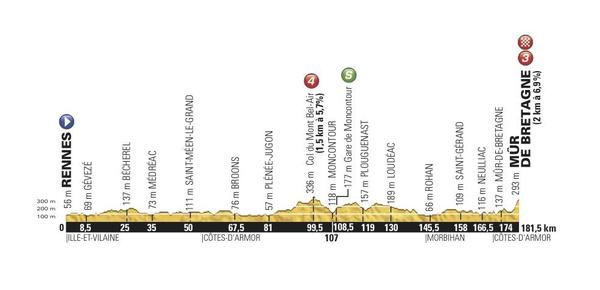 We start in the city of Rennes today, the capital of Brittany. Rennes is the 10th largest city in France, it is renowned for its telecommunications industry, and is also a major university town. We basically follow the route of the N164 today, the road which runs from Rennes to the West coast of France. However, the route doesn't actually stya on the road, which is a direct route. Instead it meanders, like a big letter "S" on its side. The Col du Mont Bel Air is 1.5km @ 5.7%, and after 100km. Interestingly, the intermediate sprint comes very soon after the descent from this ramp. After the intermediate sprint it there are just over 70km left, and you expect the pace will ramp up on the run-in to the Mur-de-Bretagne. 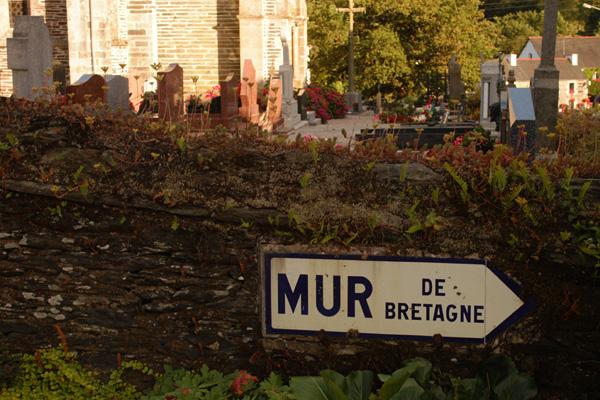 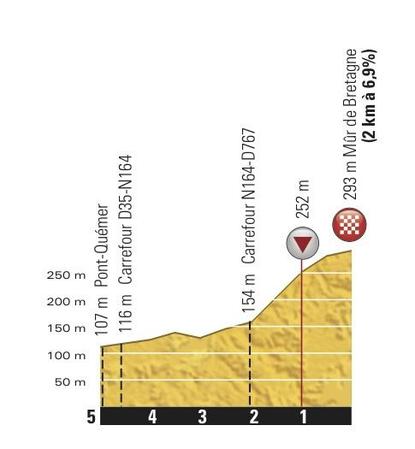 The Mur de Bretagne is 2km at 6.9%, but that is a little bit misleading. The steepest ramps are on the lowest slopes, where the gradient get up to 10% for the first 1km. After that the gradient eases off significantly. The penultimate 500m average 5.5% and then last 500m average 2.4%. The Tour has only been to Mu de Bretagne once before, when Cadel Evans won stage 4 in 2011. This climb would normally suit someone like Alejandro Valverde but he has struggled in this Tour so far. 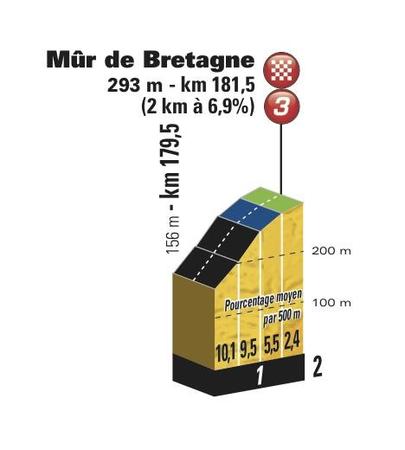  |
|
By:
Stage 9 (TTT) » Vannes › Plumelec (28k)
It's team time trial time   It's a 28km course from Vannes to Plumulec in Brittany. This is a very unusual TTT. Normally team time trials are very early in grand tours to ensure everyone has a full complement of riders. It is not normal to have a TTT this late. Also, this has followed the most hectic start to a GT that I can remember. To be frank it is astonishing that all four of the main GC teams have 9 riders, given the start we have had. If any team had one or more riders missing they would be at a very big disadvantage.  28km doesnt seem like a long course, but we could see significant time gaps. There are three climbs on the route, including the 3rd at Plumulec which could really see teams suffer. What you want for this course, ideally, is two teams. You need to have 5 climbers. The last climb will be very hard. 1.7km @ 6.2% is a very sttep climb to come at the end of a team time trial. The watch stops on the 5th rider, so your first 4 can only go at the speed of the 5th rider. To give an idea of how steep this final climb is, the last time a road stage finished here it was won by Alejandro Valverde in 2008.  BMC are odds on favourites. They are very strong with several time trial specialists and other rouleurs. The issue for me with their team is that I can only see 4 climbers. They can only go at the speed of whoever will be hanging on (Van Avermaet?). They should podium but they are very short in my eyes. To me this is between Movistar and Sky. Movistar are incredibly strong. They have 3 specialist TTers is Castroviejo, Malori and Dowsett. Dowsett may still be recovering from his crash but this lineup gives them good flat speed. Moreover, they have 5 specialist climbers in Herrada, Valverde, Izaguirre, Quintana and Ancona.  Sky have at least 7 guys that could be there at the finish in theory, which is the most climbing power of any team. They might not have the flat power of BMC or Movistar, so it would not surprise me to see them down at the first checkpoint. I think they will use Rowe, Stannard and Roche or Kennaugh to power them on the flat and then they will use their considerable climbing strength on the final climb at Plumulec to try and claw back time on the teams that might be stronger on the level.  So I think it will be close between Movistar, Sky and BMC with the rest a bit further back. When you have three teams that you think are fairly equally strong it makes sense to go for the one at the bigest price. Personally, I've done Sky at 8/1 and 10/1, although for fairly moderate stakes. I wish I'd gone back in at 14/1 when Padds pushed them out to that price but I'd used both the accounts I have access to to the maximum I could get on. Other teams that look like they could perform fairly well here are Tinkoff and Astana. Astana look to have a very strong team and on paper they really could threaten at least a podium as they seem to combine flat speed and climbing power beautifully. However, there are huge form doubts about virtually their whole squad and on the basis of what we've seen in the last week or so I feel happy to discount them from my calculations. AG2R and Lotto Jumbo might outrun their perennial lightweight status in this particular test due to their decent number of climbers.  So, there are 3 potential winners in my eyes - Sky, Movistar and BMC. And its Sky here for me, and I may also look to do a small saver on Movistar as they are a very decent price in my eyes because BMC are so short in the market. |
|
By:
Stage 10 » Tarbes › La Pierre-Saint-Martin (167k)
Bastille Day in the Pyrenees!  We move into a whole new phase of the Tour de France now with this stage that will allow us to see the climbers properly flex their muscles for the first time in the race. The Tarbes Budget Ibis was our base for 5 days last year when we did the Etape du Tour. Tarbes is a nice, tidy town, and in the same way that Gap is seen as the gateway to the Alps, Tarbes and the nearby Pau & Lourdes are very much gateway to the Pyrenees. From practically anywhere in Tarbes, you can see the beautiful and rather intimidating site of the Pyrenees dominating the Southern horizon. There's a lovely Italian in the very pleasant town centre called La Dolce Vite that do a good pizza and a mean bolognese, but I really don't recommend the Buffalo Grill. In fact my advice would be to give the whole chain of Buffalo Grills a very wide berth indeed. We have the first "real" climb of the Tour today with the HC summit finish at La Pierre-Saint-Martin. 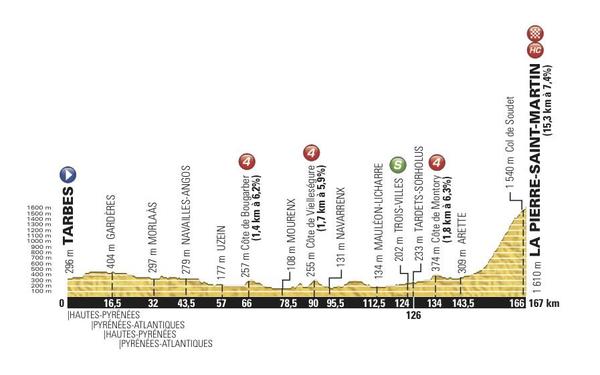 This stage could catch some riders out. For a start, it comes after the rest day, secondly, the profile is pretty flat so the whole rhythm will be disturbed by the HC climb at the end. Lastly, as it is Bastille Day there will be extra incentive for the French riders. The stage is 167km long, but the first 143km are virtually flat. There are 3 Cat 4 climbs but they aren't going to cause any problems for anyone. The riders will head North West out of Tarbes towards Pau, which they skirt around to the North. They will then head South West towards Spain. The 3 Cat 4 climbs come at 66km, 90km and 134km. Once they are over the Cote du Montory they will quickly hit the lower slopes of the final climb. 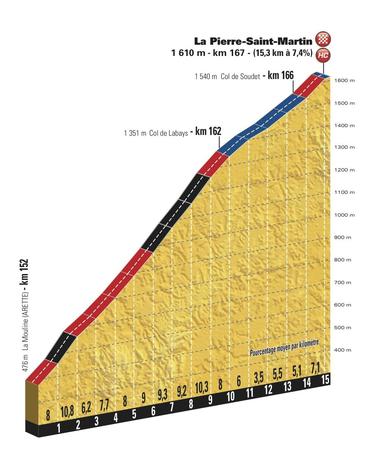 La Pierre St Martin is a ski station on the Spanish/French border in the Pyrénées-Atlantiques region close to the town of Arrete. This area is well known for its caves, which are among the largest and most extensive in the world. Some of them are kilometres long, and one has a cavern called La Verna that has been measured at 250m wide and 194m high. It is said that you could fit 6 Notre Dame cathedrals in there, and a hot air balloon has even been flown in it! I doubt whether most of the peloton will be interested in having a look at the caves though. They will be too busy worrying about this climb. The climb measures 15.3km @ 7.4%. This is a serious test. This has been described as a harder climb than the Tourmalet, and possibly one of the hardest in the Pyrenees. The gradients start midly, but quickly ramp up and there are several consecutive kilometres with gradients over or well above 8%. Around 10km in the gradient eases slightly, but then gets serious again with the remainder of the climb varying between 5%-7%. The top is just after the Col du Soudet and the ski station right on the border with Spain, at 1610m. A difficult day following the rest day and with the change of rhythm that the climb will need. Someone is bound to lose time here. Bardet, Pinot, Barguil and co will be keen to take win on their national day, but this could be the day that we see Nairo Quintana stamp his mark on the race. 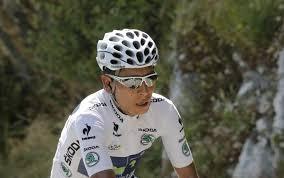  |
|
By:
Stage 11 » Pau › Cauterets (188k)
This is a serious amount of climbing today, with the famous Tourmalet climb providing the Souvenir Jacques Goddet. It is conceivable however, that there won't be time gaps between the major competitors as the final climb is the Cat 3 Cauterets.  In many ways this is similar to Stage 18 of last year's tour, starting as it does in Pau and including a climb of the legendary Tourmalet. However, last year the stage, won by Nibali, was only 145km and this year it is 188km. Last year the route went through Nay and Ossun on the way to the Cote du Loucrup, whereas this year they go through Lourdes. Last year the Tourmalet was the first of the two big climbs on the route for the day with the Hautacam as a summit finish, this time it is the second as we take the Cat 1 Col d'Aspin on the way there before descending to Sainte-Marie-de Campan, where the Tourmalet starts.  The riders will head South and then primarily East out of Pau. There are 6 categorised climbs in all on this 188km route, but the first half of the route is fairly flat, only containing the Cote du Loucrup (Cat 3 - 2km @ 7%) the Cote de Bagneres-de-Bigorre (Cat 4 - 1.6km @ 6.1%) and the Cote de Mauvezin (Cat 3 - 2km @ 6%). After the Mauvezin the riders will turn directly South until they reach the town of Arreau at 105km into the stage. Here they will turn and travel primarily North and West and this is where the nature of the stage changes and the real climbing starts with the Cat 1 Col d'Aspin.  The Col d'Aspin is a famous old Pyrenean climb. This will be the Col d'Aspin's 72nd appearance in the Tour, and 9th since 2000, which is down more to its location between the Tourmalet and the Peyresourde than the difficulty of the climb. That is not to underestimate this climb. They take it from the harder eastern side, and at 12km @ 6.5% and with 779m of vertical gain it will soften the legs of any rider, especially as the hardest stretch is near the top. But compared to some of its neighbours this is not a hard climb, especially with what comes next. The descent is not too bad from the Col d'Aspin, but there will be little respite for tired riders as they will soon get to Sainte-Marie-de-Campan and the start of the Tourmalet climb.  The Tourmalet is 17.1km @7.3%. It is a very difficult climb. The Tourmalet wil be making its 84th appearance in the Tour, and its 10th since 2000. It is the most commonly used mountain pass. The Tourmalet is also the highest paved mountain pass in the French Pyrenees. The first few km start fairly easily, before the gradients get far harder soon after the town of Gripp. The last 11km of this climb are all at 8% or above, but the steepest slopes are at 12%. There is vertical gain of 1,268m on this climb and it tops out at 2115m. The descent can sometimes prove as decisive as the climb. We will see the riders take the same very technical descent on that Valverde attacked on last year and split the bunch to pieces. This descent is horrendous and terrifying in bad weather (I speak from personal experience). This time any attack on the descent could stick because after the descent the riders only face the Cat 3 Cauterets, rather than the HC Hautacam.  After the descent of the Tourmalet the riders have 10km to go. The stage actually finishes after the Cote de Cauterets (6.4km @ 5%), and both the Cauterets and the following 3.5km can be classified as irregular climbs, with flats followed by steeper ramps. The last time the Tour finished in Cauterets was in 1995 when stage 15 was won by Richard Virenque although the stage will always be remembered as the day Fabio Casartelli died after a crash on the descent of the Col de Portet d'Aspet.  If we have wet conditions this could be won by an attacking descender on the Tourmalet, such as Nibali, Valverde or Bardet. If it stays together until the Cauterets then it could suit someone who thrives on a climb with irregular and constantly changing gradients like Alberto Contador.   |
|
By:
Stage 12 » Lannemezan › Plateau de Beille (195k)
A last day of Pyreanean climbing before we head East towards the Alps, but what a day this is. We have four categorised climbs on this 195km stage, and they get harder and harder culminating in the monstrous HC Plateau de Beille summit finish. There is a Cat 2 climb, 2 x Cat 1s and then the HC summit finish in what should be a great spectacle and go a long way towards establishing (or confirming) the GC order. 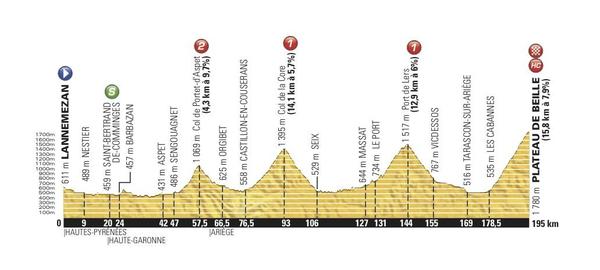 This is the third consecutive day with a lot of climbing and this could see some very big time gaps. The stage starts in the town of Lannemezan, South of Toulouse and East of Tarbes and on the eponymous plain which counts as the source of 18 different rivers. The area has a history of floods and mudslides, but it is unlikely we will see anything like that today. From Lannemezan we move generally East, moving more or less parallel to the Spanish border. The first 40-odd km of this stage are pretty flat, just to lull the riders into a false sense of security, but after 47km they will hit the first slopes of the Cat 2 Col de Portet-d'Aspet. From there on there is hardly a flat piece of road until the end. The Col de Portet-d'Aspet is a Cat 2 climb, infamous for the death of Fabio Casartelli in 1995, who died on the descent after a crash with several other riders when he hit his head on a concrete block at the side of the road. 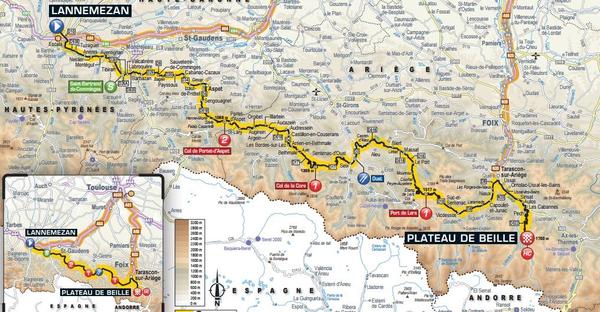 The Portet d'Aspet is a hard climb, steep but mercifully short at 4.3km @ 9.7%. On this stage though the climbs get bigger and bigger. The Col de Portet d'Aspet should already see a large autobus form, and the pain continues when the riders hit the town of Castillons at 76km and they approach the second climb of the day, the Cat 1 Col de la Core. 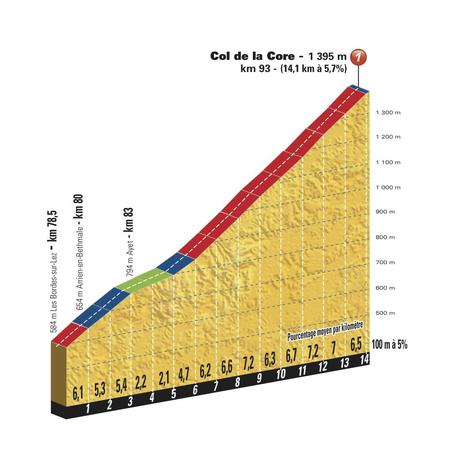 Col de la Core is 14.1km @ 5.7%. It starts fairly innocuously, with low gradients, but towards the top there are 8km of climb where the slopes are always 6-8%. There is over 800m of vertical gain on this climb that tops out at just shy of 1400m. The descent is not too technical and following the descent there are some flat kilometres as the riders head towards the third climb of the day, the Cat 1 Port de Lers. 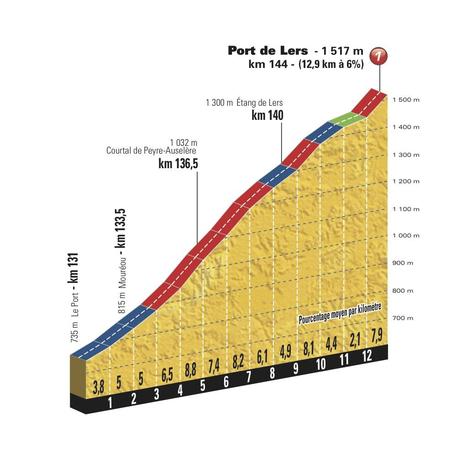 This is quite an irregular climb and it could catch riders out who are not happy with constantly changing gradients. This climb has been used in the Tour four times since the first time in 1995. Most recently it was included in 2012 when Sergio Paulinho won the stage that finished in the nearby Foix. The climb starts in the town of Massat and the early gradients aren't too steep. The slopes then go upto 6-9% for the nex few kms, and there are some short sections upto 12%. About 5km from the summit the gradient eases before another steep section around 8% just before the summit. The Port de Lers is 12.9% @ 6km in total, which is nearly 800m of vertical climb. When they reach the summit there are just under 50km to go in the stage. 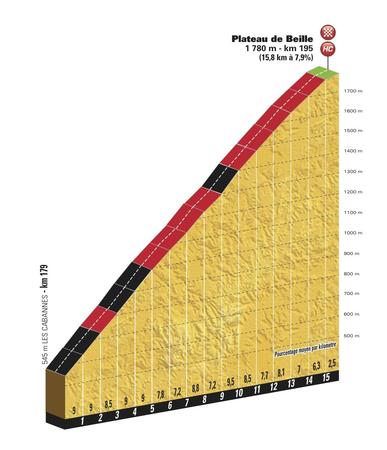 The final climb to the ski station of Plateau de Beille is an absolute beast. This climb has featured on the Tour 5 times since 1998, most recently in 2011 when Jelle Vanendert won Stage 14. The hardest gradients on this climb are at the beginning, with steep ramps immediately out of the square in Les Cabannes. The climb is 15.8km @ 7.9% which makes this climb similar to L'alpe d'Huez. The first 12km of this climb will see the riders get cover from the forest, but after that it is open. The roads are primarily smooth for the forst part of the climb too, but they do deteriorate on the higher slopes where there are several switchbacks. This is a very hard climb at the end of a tough stage. Tthere could be very big time gaps and it would be no surprise to see the winner of this stage take the overall race. 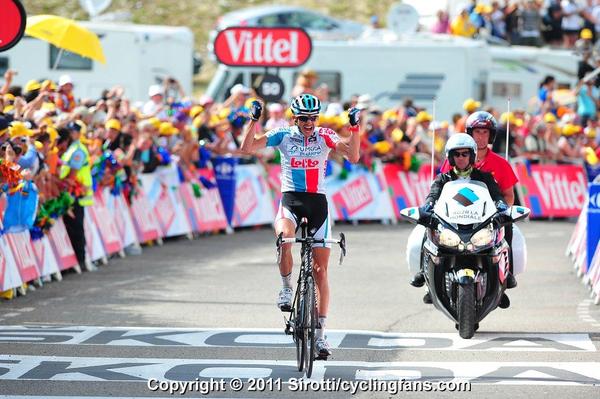 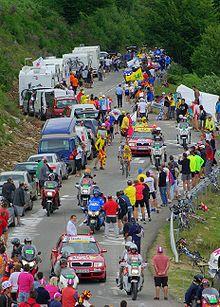  |
|
By:
Jesus Marychain1
|
|
By:
Stage 17 » Digne-Les-Bains › Pra-Loup (161k)
A repeat of Stage 6 of the Daphine, won by Romain Bardet after a daring attack on the descent of the Col d'Allos 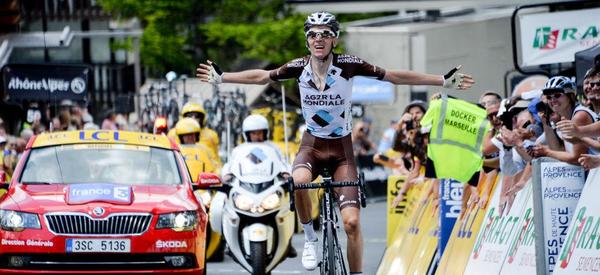 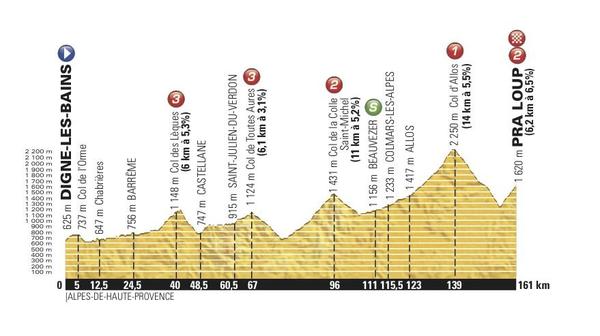 The first and probably the least intimidating of four stages of Alpine climbing. This stage has 5 categorised climbs, but the first two of them are only Cat 3, with a Cat 1 and two Cat 2s, which are the third climb and the final climb at Pra-Loup. There is every likelihood that this stage will be again decided by the descent of the Col d'Allos, as there is every chance of building up a significant gap on the descent and maintaining it on the shortish final climb of Pra Loup, especially if the forecast rain materialises. The stage starts in Digne-les-Bains and heads South East towards the Med in the Nice/Antibes area. The start of the first climb comes after roughly 34km, the Cat 3 Col des Lèques (6km @5.3%). After this climb the riders reach the town of Castellane and head North. Here the riders skirt the outstandingly beautiful Verdon Gorge, where the turqoise-green Verdon forms a river valley through 700m high Limestone cliffs. At St Julien the route turns away from the gorge and towards Vergons. Here the riders reach the second climb, the Cat 3 Col des Toutes Aures (6.1km @ 3.1%). There is a long descent of the Toutes Aures at the bottom of which the riders will turn once again Northwards and head immediately upwards towards the Cat 2 Col de la Colle-Saint-Michel. At 11km @ 5.2% this is a long climb and by the time they have got onto the climb proper they will already have taken on several km of false flat. Following a short descent the riders again find a section of false flat where the intermediate sprint is located. Following the sprint the road goes uphill again, with about another 12km of false flat before the road cranks up further at Allos. 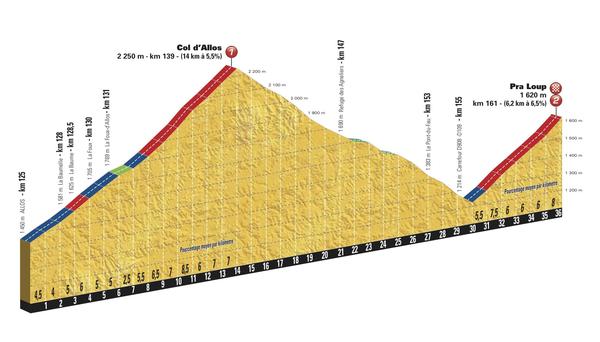 The Cat 1 Col d'Allos is 14km @ 5.5%, but they will have gained over 1100m from the valley floor and the Col d'Allos reaches 2250m. This is not a hard or steep climb, but it is very long. The GC teams should be working hard on this climb, and even if Sky do not ride hard, I would expect Astana, Movistar and Tinkoff to be driving a fast pace to test their rivals after the rest day. The descent from Col d'Allos could be more significant than the climb. Rain looks a distinct possiblity, and this is a long, fast and technical descent with uneven portions of road, and places with adverse camber. 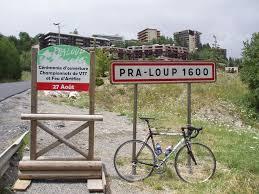 The final climb is Pra Loup, a Cat 2 climb that is 6.2km @ 6.5%. This is the climb that broke Eddy Merckx in 1975 when he was caught and passed by Bernard Thévenet. It starts off fairly easily, with gradients of around 5.5% before getting steeper in the second kilometre. After this the gradient eases, with a few km at or around 6%. The final 1250m or so get steeper with gradients above 8%. This is the second time Pra Loup has been an arrival destination on the Tour. Thévenet won in 1975, and then when the Tour came back in 1980, Jos De Schoenmaecker took the honours. 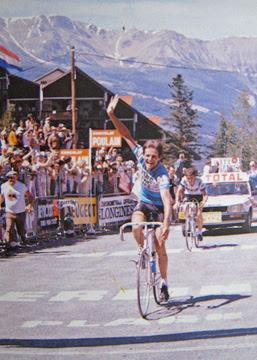 |
|
By:
2015 » 35th Clasica Ciclista San Sebastian (1.UWT) 219km
 Clasica San Sebastian in the Basque Country is a very popular race in an area of Northern Spain well known for the passion of its cycling fans. The scenery for this race is stunning, combining gorgeous climbs, the city streets of San Sebastian and amazing ocean views. The 2014 route for Clasica San Sebastian, won by Valverde in a late attack, was considered such a success by the organisers that they have decided to repeat it. Donostia-Donostia is one of the so-called summer classics and has been run since 1981. It is known as a climbers classic due to the typically difficult nature of the course, and has been won by several stage race specialists. 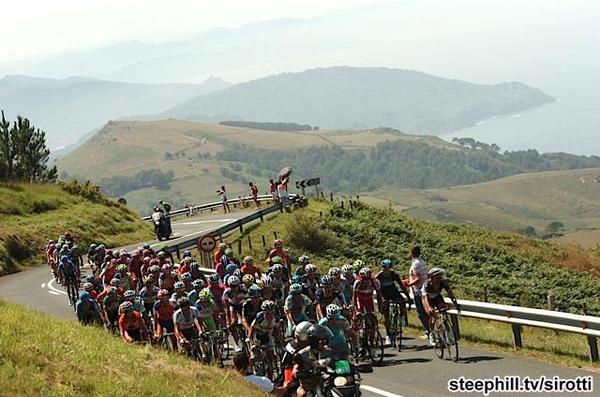 The new and decisive climb introduced in 2014 is the Bordako Tontorra, and is only 7km from the end. This is an extraordinarily difficult and must-see climb and will make sure that only the best climbers can triumph, it has several sections at upto 20% and is on very narrow, slippy, crowd-lined streets. In parts, this climb is only a car's width wide. Have a look at the footage from 2014 to get a feel for this late climb. The twice-taken Jaizkibel and Arkale climbs will already have weakened the legs of the peloton, but it is the 15km circuit that takes the riders high above the city, the awful Borkado Tontorra climb and the descent from it that will decide the winner. 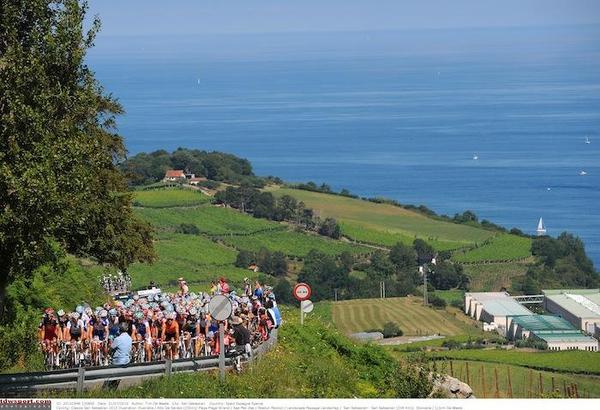 The lineup looks very strong. Movistar bring both their Tour podiums in defending champion Alejandro Valverde and Nairo Quintana. Last year's third place Purito Rodriguez is back again after his two Tour stage wins. Both these teams look very strong. Sky's challenge looks spearheaded by Roche and Henao. Astana bring Landa and Fuglsang. Tinkoff have Contador and Majka. Uran, Rui Costa, Gilbert, Bardet, Pinot, Mollema and Barguil make up a strong posse of climbers. Chris Froome could ride if he recoveres from the Tour well. Euskatel Euskadi may be no more, but the local fans will get behind the Caja Rural team and hope that their main man David Arroyo can pull off a famous result. Map 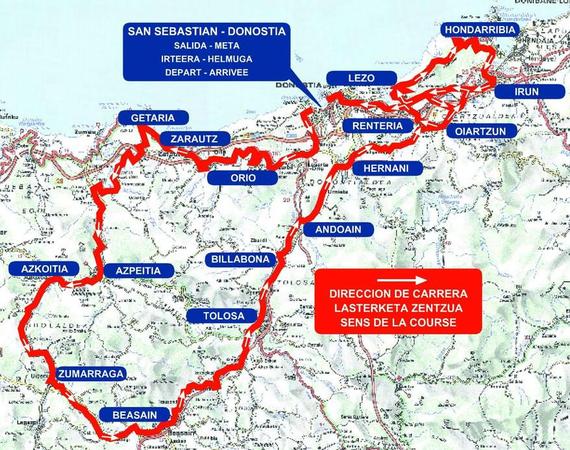 Profile 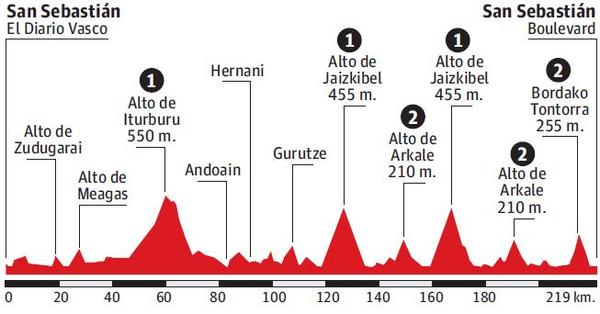 Clasica Ciclista San Sebastian Winners 2014 | VALVERDE Alejandro 2013 | GALLOPIN Tony 2012 | SANCHEZ Luis Leon 2011 | GILBERT Philippe 2010 | SANCHEZ Luis Leon 2009 | KREUZIGER Roman 2008 | VALVERDE Alejandro 2007 | GARATE Juan Manuel 2006 | FLORENCIO Xavier 2005 | ZABALLA Constantino 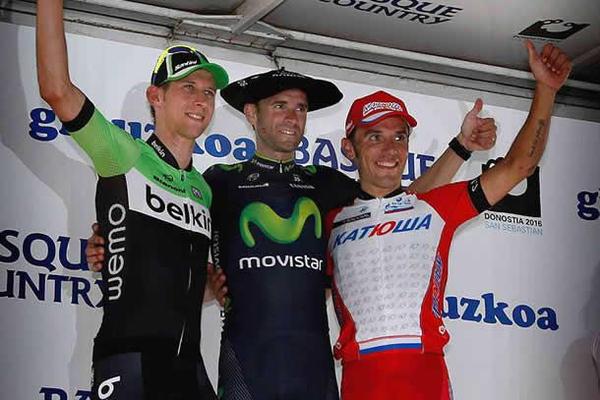 2014 Clasica Ciclista San Sebastian Top 10 1.VALVERDE Alejandro 5:31:11 2.MOLLEMA Bauke 0:14 3.RODRíGUEZ Joaquim ,, 4.NIEVE Mikel ,, 5.GALLOPIN Tony 0:26 6.VANENDERT Jelle ,, 7.ZUBELDIA Haimar ,, 8.VAN AVERMAET Greg 0:40 9.VISCONTI Giovanni ,, 10.STYBAR Zdenek 0:43 2014 Clasica San Sebastian last 10kms video https://www.youtube.com/watch?v=GLYdXFDWCaw   Startlist http://www.procyclingstats.com/race/Clasica_Ciclista_San_Sebastian_2015-startlist You'd think that with the late climb and descent Alejandro Valverde will take all the beating, but if the Tour has left its mark then maybe the Giro d'Italia runner-up Mikel Landa can take the win in his native Basque Country and wear the famous Txapela headwear. |
|
By:
Stage 2 » Alhaurín de la Torre › Caminito del Rey (165k)
 Map  Profile  What a first stage proper of a Grand Tour we have in store here. Think Mur de Bretagne then add about 1 kiometre and you have something approaching the finale of this stage, which finishes at Caminito Del Rey - King's Pathway - which is famed as the most dangerous walkway in the World. The final climb here is just over 3km at roughly 9%, a frankly astonishing opening to a Grand Tour, and the mountain walkway should provide a jaw-dropping background to the action. The stage itself only has two uncategorised climbs - both late on - but the stage is lumpy enough that it will suit a breakway and I'm sure we'll see Caja Rural and Columbia get their jerseys on display today or risk the anger of their DS and sponsors. The break has little chance of staying out today though. At the start of a Grand Tour everyone is a little anxious, which means the pace will be high, and the finale means the GC teams will be involved in driving the pace. The finish is hard enough that there could be some decent time gaps at the end of the stage, so everyone will be keen to be in a decent position. This in itself means that there is a danger of crashes in the run in as teams fight for position. The finish at Caminito del Rey is in the Ardales mountains near Malaga. The walkway was built for workers at the hydroelectric plants at Chorro Falls and Gaitanejo Falls to enable them to move between them. Alfonso XIII crossed the walkway on its opening in 1921 and its current name was born. The walkway fell into disrepair as the concrete crumbled and fell between the steel reinforcement bars and after several deaths by people who fell, the walkway was closed in 2000. It was restored and repaired in 2011 by the Andalusian government, and reopened in March 2015. Last kms   |
|
By:
*Vuelta a España - Stage 3* Monday 24th August
Stage 3 » Mijas › Málaga (164.6k) Map  Profile  This looks like one for the sprinters, with the categorised climbs coming early enough in the race that they should pose no problems. The race starts at Le Cala de Mijas, a small coastal town almost exactly halfway between Marbella and Malaga. Le Cala is famous for its restaurants and golf courses and is a very popular tourist destination on the Costa del Sol, nestled between the mountains of the Sierra de Mijas Natural Park and the Med. The route takes the riders inland and they start the first climb after only 8km, the Cat 3 Alto de Mijas, which is a sharp but mercifully short climb.  After Alto de Mijas the peloton will drop back out of the hills towards the coast and Malaga. They pass through the City and back inland toward the first serious test of this year's Vuelta, the Cat 1 Puerto del Leon. This is 16km at 5% average. It is a fairly steady climb, although it does have about 400km at 15% after about 10km. Luckily there is a section where riders can recover immediately after this as the gradient drops back down to about 2%. This climb is far too far from the end of the stage for attacks to be successfully launched from this climb. With 80km still to go, they will take this climb fairly slowly and no-one should be dropped here. Following the climb they head back towards the coast and when they hit the town of Torre Del Mar they turn back towards Malaga, heading all the way in on the coast road.  The finish in Malaga is straightforward, but there are two sections that will require maximum concentration, and positioning will be important for anyone with designs on the stage. There is a right/left chicane at 3km, and then just before the flamme rouge there is a 270degree right hander that brings the riders onto Alameda Principal. This road turns into Paseo Del Parque with 350m left, and this finishing straight is 7.3m wide. Nacer Bouhanni is the fastest man in the Vuelta Peloton, and his Cofidis train is starting to work. However, John Degenkolb has 9 Vuelta stages to his name, his Giant team are bound to put him in a fantastic position and with the late corners he could win today.  |
|
By:
Stage 5 » Rota › Alcalá de Guadaíra (167.3k)
Map  Profile  This 167km stage from Rota to Ronda is almost pan flat, which means there will be heavy responsibility on the likes of Giant and Cofidis to bring back the morning breakaway and ensure a bunch sprint in Ronda. The stage starts in Rota, across the Bay of Cadiz from Cadiz itself, next to the Rota Spanish Naval Base. The road heads North then East into the town of Jerez de la Frontera before heading North towards the City of Seville. Last kms  The peloton hit the City of Seville with 17km to go, and this is where we find the day's intermediate sprint. Seville is the 4th largest town in Spain, and the hottest city in Europe. in 1519 Ferdinand Magellan left Seville for his first circumnavigation of the Earth. The peloton head South East out of Seville before turning North with just under 10km remaining. There are a number of roundabouts in the finishing sectors, including a large one at 4km, at just before 2km, and then one either side of the flamme rouge before a 90degree left hand turn at 600m to go onto C. Castillo de Marchenilla where we find the finish line. The last few kms are almost flat but slightly downhill. This will ensure a fast run-in, however the last 700km or so do have a gradient of about 5%, which may discount some of the bigger sprinters like Nacer Bouhanni. Although this finish might actually better suit one of his leadout men like Geoffrey Soupe or Julien Simon, I still expect Bouhanni to be the man for today's sprint. However, this slight gradient is possibly more suited to someone like John Degenkolb or Peter Sagan.  |
|
By:
Stage 11 » Andorra la Vella › Cortals d´Encamp (138k)
Map  Profile  Difficult to know how to preview this stage except to say that this is a simply astonishing amount of climbing. Coming after the rest day, this short brutal stage, that Joaquin Rodriguez helped plan, will go a massive way towards deciding this Vuelta. The forecast is for bad weather, but even if the weather is fair this will be very hard. There is more than 5,000m of climbing on this day that sees the peleton take on 1x Cat 2, 4 x Cat 1s and an ESP climb.    There are 3 Cat 1 climbs in the first 70kms, with the Collada de Beixalis, the Coll d'Ordino & the Coll de la Rabassa. The Beixalis is 6.5kms at nearly 10% with 3kms in the middle at over 12%. The Ordino and Rabassa are longer, steadier climbs at 9kms and 13kms. The Ordino rarely drops below 7% but has a maximum gradient of 8.5%. The Rabassa has some steeper slopes of around 11% and 12% but it gets easier towards the summit. At the top of this climb the riders are about at the halfway stage, and already most of the domestiques will be out the back door.  The ESP climb Gallina is an extraordinarily difficult climb. It has over 1,000m of climbing and averages over 8.5% over 12km with ramps up to 18%. This road has been newly resurfaced but it is still a horrible climb and will see all but the specialist climbers in real difficulty. It will be very interesting to see how riders like Tom Dumoulin compete on this test. If he can remain with the big big favourites he can become a genuine Grand Tour contender.  After the Gallina, there is a long descent, the Cat 2 Alto de la Comelia which is 4kkm at over 9% but which will seem like a walk in the park in comparison to some of the other climbs today. The final climb, the Alto Els Cortals d'Encamp is another horrendously steep climb. Anyone that is struggling at this stage will not be recovering on this tremendous finale. It is nearly 9km long, and has 800m over vertical gain and averages 9.3%. However, the average belies the difficulty of this climb. The first 4km average almost 11%. Even when the gradient drops off in the final 5km it is still 8%.    Needless to say, this stage will be won by a tremendous climber, which bring people like Froome and Quintana to the front of all calculations. Aru, Rodriguez and Majka would also be contenders for this stage. Its difficult to know whether a break could win this stage. It is conceivable that all the contenders out of teammates well before the final climb and in this case we might not see the mountain trains that can sometimes bring a breakaway back. In this instance, decent climbers like Mikel Landa who are already out of the GC picture could win this stage. |
|
By:
2015 » Tour of Britain (2.HC)
 In 2014, the Tour of Britain was awarded HC status, meaning it is now rated in the second-highest possible category for professional men's races. As a result, this race is now on a par with races like the Tour of Qatar, the Tour of California and the Four Days of Dunkirk. Accordingly, we saw more World Tour teams taking part, and this year we will see more than ever before, with BMC, Etixx, IAM, Lotto Soudal, Lotto Jumbo, Movistar, Cannondale Garmin, Sky and Saxo Tinkoff all taking part. The race is further helped again by the removal of the clash with the Worlds. In previous years the last day of the Tour of Britain has taken place on the same day as the Worlds TTT but starting in 2014 the Tour of Britain found a place in the schedule a week earlier, and this year the Worlds have also got later meaning a two week gap. This could well see many Worlds contenders use the Tour of Britain as a final tune up so there could be many stars on display.  If the line up looks good, so does the route. In some ways, this race is starting to take on an element of the Eneco Tour, being as it is a stage race of classics-style routes. The first two stages are fairly similar, on roads I know fairly well through North Wales first and then Lancashire on Day 2. Both days have three categorised climbs, but look fairly tame apart from that. However, there is hardly a flat section of road on these first two stages, and there will be a lot of tired legs. Classics specialists could well come to the fore on these two days. The third day is a little different. It starts in Cockermouth in Cumbria before heading up into Scotland. The first half of this stage is flat before some late climbs that could see opportunists steal time. The first three stages look like a battle between sprint trains and the classics specialists. Stage 4 looks like a full peloton bunch sprint in Blyth ahead of the next day's Queen Stage from Prudhoe to Hartside Fell in Cumbria. This stage has 4 categorised climbs including the Cat 1 summit finish - the highest in the race's history - and with no time trial this year this stage could go a long way towards deciding the overall winner. It also follows two particularly long stages in the preceding days. Stage 6 sees the race return to Stoke-on-Trent again with a stage through the peak district to Nottingham in a stage that resembles the first two, with lots of short sharp climbs. The race then finishes with two stages for the sprinters. Stage 7 should see a full sprint in Ipswich before the final Crit stage in London. Stages Tuesday 6th September - Stage 1 - Beaumaris, Anglesey › Wrexham (177.7k) Wednesday 7th September - Stage 2 - Clitheroe › Colne (159.3k) Thursday 8th September - Stage 3 - Cockermouth › Floors Castle, Kelso (216k) Friday 9th September - Stage 4 - Edinburgh › Blyth (217.4k) Saturday 10th September - Stage 5 - Prudhoe › Hartside Fell (166.4k) Sunday 11th September - Stage 6 - Stoke-on-Trent › Nottingham (192.7k) Monday 12th September - Stage 7 - Fakenham › Ipswich (227.1k) Tuesday 13th September - Stage 8 - London › London (86.8k)  Tour of Britain Previous Winners 2014 | VAN BAARLE Dylan 2013 | WIGGINS Bradley 2012 | HAAS Nathan 2011 | BOOM Lars 2010 | ALBASINI Michael 2009 | BOASSON HAGEN Edvald 2008 | LEQUATRE Geoffroy 2007 | FEILLU Romain 2006 | PEDERSEN Martin 2005 | NUYENS Nick  Tour of Britain 2014 1.VAN BAARLE Dylan 32:22:50 2.KWIATKOWSKI Michal 0:10 3.WIGGINS Bradley 0:22 4.ZARDINI Edoardo 0:37 5.ROCHE Nicolas 0:42 6.IZAGIRRE Ion 0:46 7.CHAVANEL Sylvain 0:50 8.DOWSETT Alex 0:54 9.BáRTA Jan 1:09 10.TEUNS Dylan 1:10 Startlist http://www.procyclingstats.com/race.php?id=150762&c=3 Stage 1 » Beaumaris, Anglesey › Wrexham (177.7k) Map  Profile  Last kms  The route from beautiful Beaumaris for Stage 1 takes the riders through the flat countryside of Angelsey first of all, then to the sharp slopes of Snowdonia. Cat 1 Llanberis Pass is the hardest of several walls, but comes too early in the stage to be selective. There are further Cat 2 climbs at Nant-y-Glyn and Bwlch, both of which I know from experience are hard climbs, and there are also several uncategorised lumps, but the last, at Mold, is still almost 20km from the line. This should end in a bunch sprint, possibly with reduced numbers and the hard overall nature of the stage might mean a classics type rider could pinch the day at the finish in Wrexham.  Stage 2 » Clitheroe › Colne (159.3k) Map  Profile  Last kms  A similar looking stage to yesterday, and again one that Classics specialists should enjoy, but the climbs are possibly more strategically placed. The riders will hit the Cat 1 Nick O'Pendle immediately. There are further uncategorised climbs as they meander through the beautiful fells of the Forest of Bowland. Some of these climbs are very steep but most are mercifully short. The difference between this stage and yesterday's Welsh romp is that the climbs come later in the day. There is the Cat 1 Bleara Moor with 60kms to go, immediately followed by the Cat 2 Pendle Big End with 36km remaining. The riders descend back into Clitheroe and then the next 16km across to Higham have a real saw-toothed profile. When they hit Higham there is 11km to go and even here there is a fast descent before a climb up into Colne. The final kilometre sees a ramp of roughly 5.5%. Unlike yesterday, this is unlikely to end in a full bunch sprint.  Stage 3 » Cockermouth › Floors Castle, Kelso (216k) Map  Profile  Last kms  The run from Cockermouth to Carlisle and into Scotland is fairly flat and they don't hit the first categorised climb until 130km. Then there are 3 x Cat 2 climbs in roughly 50km in the Wauchope, Winton Hill and Dingleton climbs. There are also 3 other unclassified climbs. The Dingleton climb comes with 25km to go but looks a good place to attack as most of the remainder of the route is downhill as they cross the River Tweed, past the remains of Kelso Abbey, and over a short cobbled section before the finish in the grounds of Floors Castle. If the sprinters can hang on over the late climbs it could come back together for another sprint.  Stage 4 » Edinburgh › Blyth (217.4k) Map  Profile  Last kms  Starting in Edinburgh they come back over the border into England on this stage that again has three categorised climbs, although this time the climbs are too easy and too early for them to really enable any realistic stage-winning attacks. The highest climb is the Cat 2 Redstone Rigg climb, but this is only after 45km. As the riders head towards Northumbria there are two further Cat 3 climbs at Ford and Alnwick, but they should pose no problems for anyone. Looking at the profile as the race moves Southwards down the East Coast, the best chance of this not finishing in a full peleton bunch sprint is probably the prospect of crosswinds coming off the North Sea but in reality we should see a fast and exciting bunch finish in Blyth.  Stage 5 » Prudhoe › Hartside Fell (166.4k) Map  Profile  Last kms  A relatively short stage at 166km, and one with plenty of climbing and the highest summit finish in the Tour of Britain's 10 year history at Hartside. There are 2x Cat 1s and 2x Cat 3s on this stage that starts in Northumbria and traces the route of Hadrian's wall before finishing in the Pennines at Hartside Fell. There are also plenty of uncategorised lumps as well. They start climbing almost immediately out of Hexham, before taking on the first Cat 3 at Haydon Bridge. Little of this stage is flat, but there should be a fast finish, as the climb up Hartside Fell is the biggest opportunity to make time on this race. There is an intermediate sprint with 23km to go before a short climb out of Penrith, a quick descent and then they are onto the climb. Hartside Fell is classified as a Cat 1, it is 8km at about 5.5%. Although this climb by itself would not cause too many problems normally, it comes at the end of a hard stage, and following two long stages the previous two days and this should be enough to see some decent gaps form.  Stage 6 » Stoke-on-Trent › Nottingham (192.7k) Map  Profile  Last kms  Another stage of very short, hard climbs but most of the tough stuff is in the earlier part of the stage. There are only three categorised climbs on this stage, all Cat 2s, but some of the unclassified lumps are also exceedingly hard. Gun Hill, which comes on the initial stages of the section has ramps up to 25% and once made Mark Cavendish cry on a training ride. There are several further unclassified climbs that are very hard, including the hills around Castleton. Luckily for the peleton they descend rather than climb the devilish Winnatt's Pass which made my brother throw up on a recent ride there. They then take on the three Cat 2 climbs at Millstone Edge, Beeley Moor and Cromford Edge but the last 50kms or so are a lot flatter, and despite the tough nature of the stage overall, this should come back together to some extent and we could see another bunch sprint in Nottingham.  Stage 7 » Fakenham › Ipswich (227.1k) Map  Profile  Last kms  A very long flat looking stage that meanders through East Anglia from Fakenham to Ipswich and will almost definitely end in a bunch sprint.  Stage 8 » London › London (86.8k) Map  Profile  Last kms  A crit stage through London that includes the sights of Regent Street St James, Piccadilly Circus, Trafalgar Square, the Strand and Whitehall to finish the week and another inevitable bunch sprint.    |