Welcome to Live View – Take the tour to learn more
Start Tour
There is currently 1 person viewing this thread.

Are they any good, Im getting one in a few weeks. 
Show More

dont forget to buy a chainsaw to go with it. a petrol one is better
I'll just buy an axe for the Missus, that'll get rid of her bingo wings 


Had two in my old house. You get through a LOT of logs.
Make sure you have the right sort of chimney liner and chimney pot. It makes a huge difference.
Make sure you have the right sort of chimney liner and chimney pot. It makes a huge difference.

Don't keep removing the ashes. If you are only burning wood, leave it to build up. Burns slower and stays lit longer smouldering in it's own ash.
yet more people being inconsiderate about the enviroment having to chop down trees to use for logs , should stick to using electric and gas like the rest of us

spend the summer building up your supply. make sure cats dont p!ss on the logs.
from now on you will look at wood in a different light.
from now on you will look at wood in a different light.

Love them.
As said, make sure your chimney is properly lined and that there are no ledges inside the flue where hot ash could fall and gather and ignite the beam above the fireplace.
When I was a kid the only heating we had was an open fire, and though we lived in a built-up town (Slough ), I was brought up to bring home any bits of wood at all lying around in hedges, parks or skips. You'll soon get into the habit yourself.
Ash is by far the best wood to burn, as it has such a low moisture content. You can recognize ash this time of year by the drooping showers of green "fruit" starting to appear. In fact you CAN burn ash directly after cutting, but, like every type of wood, it benefits from being split and left to season for a year.
If you have enough wood, or the burner itself is small, do not empty the ash, but as advised above, keep it smouldering non-stop. If you're restricted in supply of wood, or you've gone for too big a burner, then there's nothing wrong with eking it out with some cheap house coal and just lighting it when it feels cold enough.
Remember to gather even what look like useless twigs, offcuts and shavings. Scrunch up about ten sheets of newspaper (broadsheets are best) and lay them in the grate, pile your twigs, offcuts and shavings on top, open up the bottom of the burner completely to let in as much air as possible, set light to as much of the exposed paper as possible and close the door(s) quickly.
When everything looks like an inferno, gradually close up the bottom (though not completely) until it's blazing merrily, then re-open the bottom, open the door(s) again and start adding thicker bits of wood or planks or small logs, then lumps of housecoal until it looks like a real fire. Shut the door(s) again, re-close the bottom as far as possible to allow a steady burn but not starving the fire of oxygen, and lean back and know that you are a real man, at one with nature and conquering the elements.
Or let the wife do it.
As said, make sure your chimney is properly lined and that there are no ledges inside the flue where hot ash could fall and gather and ignite the beam above the fireplace.
When I was a kid the only heating we had was an open fire, and though we lived in a built-up town (Slough
), I was brought up to bring home any bits of wood at all lying around in hedges, parks or skips. You'll soon get into the habit yourself.Ash is by far the best wood to burn, as it has such a low moisture content. You can recognize ash this time of year by the drooping showers of green "fruit" starting to appear. In fact you CAN burn ash directly after cutting, but, like every type of wood, it benefits from being split and left to season for a year.
If you have enough wood, or the burner itself is small, do not empty the ash, but as advised above, keep it smouldering non-stop. If you're restricted in supply of wood, or you've gone for too big a burner, then there's nothing wrong with eking it out with some cheap house coal and just lighting it when it feels cold enough.
Remember to gather even what look like useless twigs, offcuts and shavings. Scrunch up about ten sheets of newspaper (broadsheets are best) and lay them in the grate, pile your twigs, offcuts and shavings on top, open up the bottom of the burner completely to let in as much air as possible, set light to as much of the exposed paper as possible and close the door(s) quickly.
When everything looks like an inferno, gradually close up the bottom (though not completely) until it's blazing merrily, then re-open the bottom, open the door(s) again and start adding thicker bits of wood or planks or small logs, then lumps of housecoal until it looks like a real fire. Shut the door(s) again, re-close the bottom as far as possible to allow a steady burn but not starving the fire of oxygen, and lean back and know that you are a real man, at one with nature and conquering the elements.
Or let the wife do it.
Thanks for that sfb, I live about 2 miles from a timber yard and theres a massive skip by the entrance which is full of offcuts, I asked could I take some and the bloke said help yourself..Theres a mixture of wood in it hard and soft so hopefully I'll have a steady supply..I live in a Detached Bungalow which is quite isolated and its feezing in the winter, will it make any difference that the flue obviously wont be as long as a 2 storey house ?
It's the height of the flue above the apex of the roof and distance from the roof itself which are important, Alfie, rather than the absolute height.
Here are the recommendations in pictures:
http://www.stovesonline.co.uk/flue-outlet-height.html
Remember that each burner has its own character according to size, design and location.
So if you find at first you get trouble with smoke blowing back when lighting or adding wood, don't get disheartened. Just experiment with different settings, volumes of wood, combinations of coal and timber, perhaps use of paraffin wax firelighters to get it going etc.
For instance, I know that continuous running on a bed of ashes is the most efficient method, but it just suits me to clear it, empty the ash pan (excellent fertilizer, particularly for fruit bushes, if wood ash only) and relight it when I need it.
One tip above all others is, when lighting it at first, open up the bottom completely - including opening up the door which accesses the ashpan. Indeed, pull the ashpan out at first to increase air flow. This, more than anything, will prevent the misery of difficult lighting and/or smoke blowback.
And remember to open up the bottom a bit more when you open the door(s) to add a log, so you get a rush of combustion which will prevent smoke blowback.
Psychic Mutley Joined: 11 Apr 10
Replies: 1572 25 Sep 10 13:31
Had two in my old house. You get through a LOT of logs.
Make sure you have the right sort of chimney liner and chimney pot. It makes a huge difference.
If you have a class 1 chimney (old type coal chimney) in good order, my advice is to remove the liner entirely. Also beware expensive Dovre stoves, cost a fortune but better made British stoves for a lot less money.
Wow. Who would have thought, when this thread started, that just around the corner was the coldest December anyone alive had ever experienced in the UK?
Christmas morning 2010, Somerset:
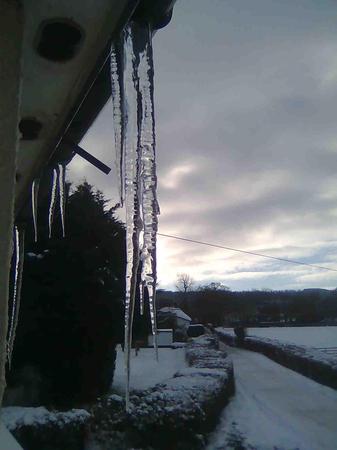
Christmas morning 2010, Somerset:

Post Your Reply


Please login to post a reply.
Wonder
Instance ID: 13539